
39. Battery Mini-Breaker for Smartphone Battery Protection
Meera is designing a Li-ion battery cell for a smartphone.
The cell voltage is 3.7V nominal and the normal discharge current is up to 4A during peak usage like gaming and fast charging.
To protect the cell from overtemperature and overcurrent, she needs a compact resettable thermal cutoff (battery mini-breaker) mounted on the cell.
The device must trip at 77°C for early thermal protection and reset automatically when the temperature drops to a safe level.
Key requirements:
Activation temperature: 77°C
Voltage rating: must cover single cell (max 4.2V)
Current rating: 6A to 12A (above 4A peak, compact size preferred)
Type: Breaker (resettable)
The company's AVL specifies Littelfuse, so the part must be selected from Littelfuse on DigiKey.
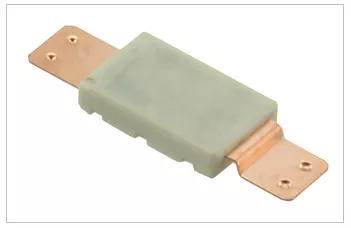
Help her select a suitable battery mini-breaker from Littelfuse on DigiKey.
Visit DigiKey's Thermal cutoffs (Thermal Fuses) category and find a suitable part.
What is Thermal fuse?
- It is a safety device used in electrical circuits
- Its job is to break (open) the circuit when too much heat is detected
- It senses heat produced by excess current flowing in the circuit
- Excess current can be caused by a short circuit or a broken/faulty component
- When the temperature reaches a certain level, the fuse triggers and cuts off the circuit
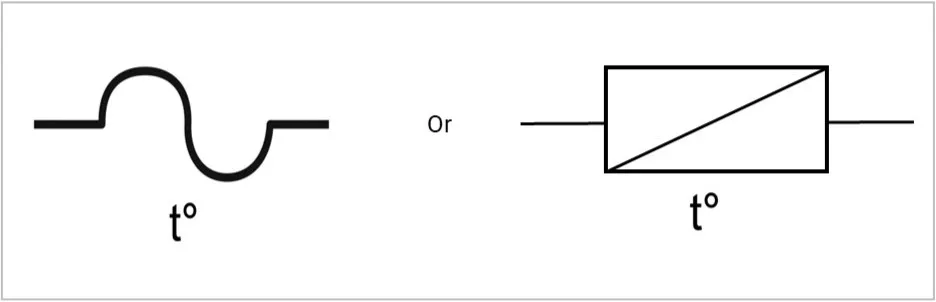
Symbols:
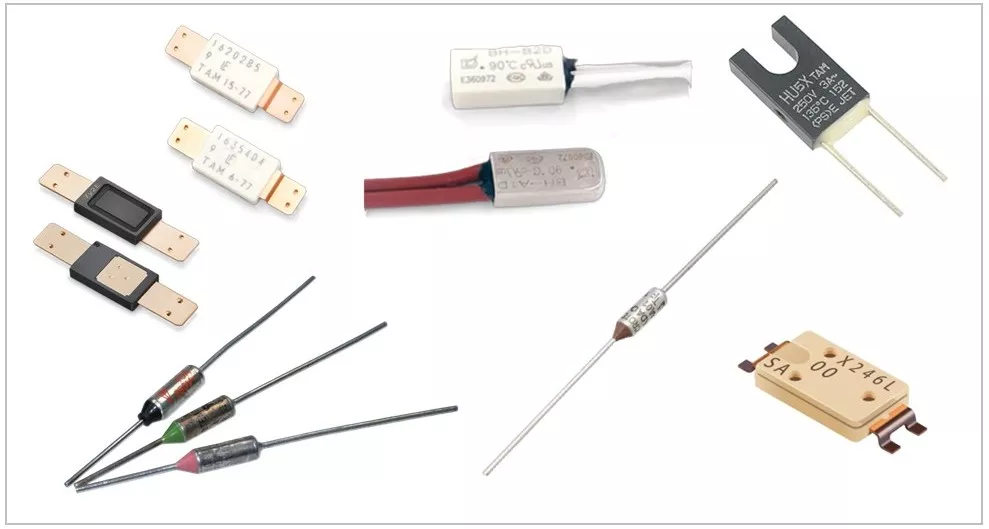
Types of Thermal Fuse
- Thermal fuses come in different designs and shapes
- Each type is made for a specific use and operating condition
- Knowing the types helps in choosing the right fuse for your application
- Thermal Fuse based on Physical Configuration:
| Type | image | Description |
|---|---|---|
Radial Thermal Fuse
| 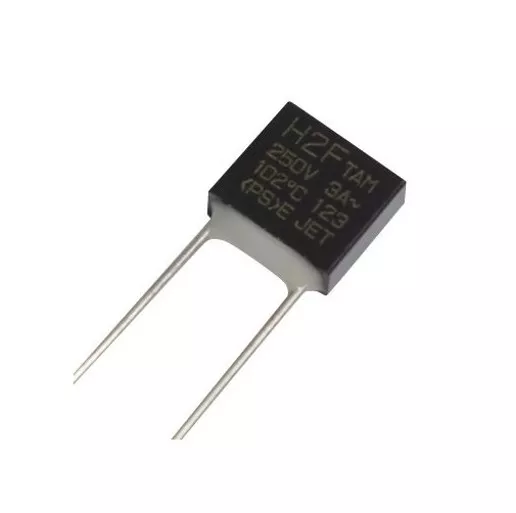 |
|
| Axial Thermal Fuse | 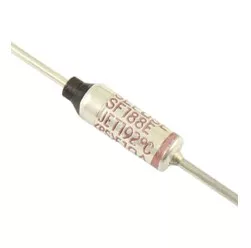 |
|
| Surface Mount Thermal Fuse | 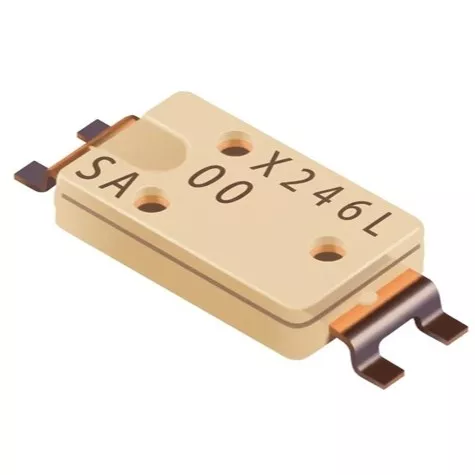 |
|
Thermal Fuse Key Specifications
- Rated Functioning Temperature (Tf): The temperature at which the fuse opens the circuit. It is often rated from 70°C to over 240°C.
- Holding Temperature (Th): The maximum temperature at which the fuse can operate for 168 hours without opening.
- Maximum Temperature Limit (Tm): The maximum temperature the fuse can sustain after it has operated without reclosing or creating a fire hazard.
- Rated Current (Ir): The maximum amperage the fuse can safely carry (e.g., 5A, 10A, 16A).
- Rated Voltage (Ur): The maximum voltage the fuse is designed for (e.g., 125V or 250V AC).
- Contact Resistance: Typically very low, often less than 1 ohm to ensure minimal impact on the circuit during normal operation.
- Tolerance: The permissible variation in opening temperature, typically in the range of 2°C to +0°C/-10°C.
Hold Current vs. Temperature Curves
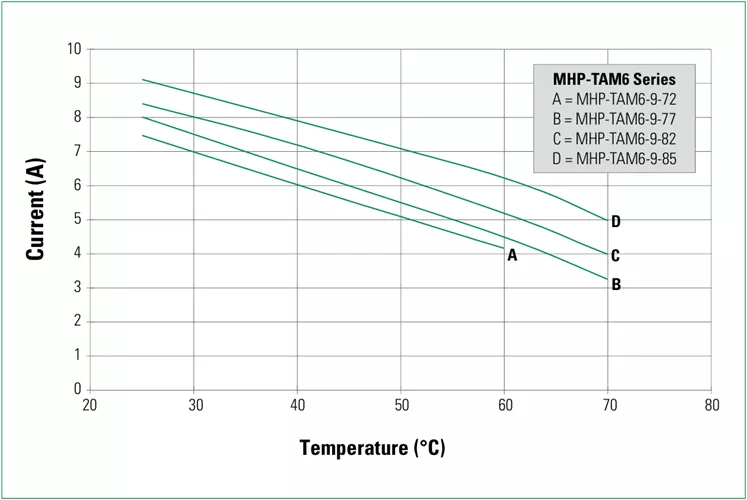
- This is the fuse variant with the lowest trip temperature (72°C), meaning it trips earliest among the four variants.
- At 25°C it allows ~7.5A, but by 60°C it drops to ~4A — nearly half, so it dereates steeply with heat.
How Does a Thermal Fuse Work?
- Inside every thermal fuse, there is a tiny pellet (Thermal element) made of a heat-sensitive material (usually a metal alloy)
- During normal operation, this pellet (Thermal element) stays solid and allows current to flow through the circuit
- When the temperature rises too high due to excess current or a faulty component, the pellet (Thermal element) starts to melt
- This melting breaks the electrical circuit inside the fuse
- Once the circuit is broken, electricity stops flowing immediately
How to select a Thermal Fuse?
Match the fuse temperature and electrical ratings to your appliance requirements
1. Temperature Ratings
- Trip Temp (Tf) — Select 10°C to 25°C higher than device's normal max operating temperature
- Hold Temp (Th) — Device's normal temperature must never exceed this value
- Max Temp (Tm) — Fuse must physically survive this temperature after tripping
2. Electrical Ratings
- Voltage — Must be equal to or greater than circuit voltage
- Current — Choose 125% to 150% of normal operating current
- AC vs DC — Always use fuse rated for your current type
3. Physical & Mounting
- Lead Type — Axial or Radial based on available space
- Case Material — Ceramic for high temp, Phenolic for high strength
- Certifications — Always check for UL, VDE, or IEC approval
4. Replacement
- Fix the root cause before replacing the fuse
- Check Tf, voltage, current printed on the fuse body
- Avoid direct soldering — use crimp connectors instead
Applications of thermal fuse
- Thermal fuses are used in many electrical appliances and industrial machines
- They act as a protection device to prevent dangerous heat-related events
- They are commonly found in devices where excess heat can cause fire or damage
Common Applications where Thermal Fuses are used:
- Home Appliances
- Used in coffee makers, toasters, electric kettles, and microwave ovens
- Prevents overheating and fire risk in daily use appliances
- HVAC Systems
- Protects heating elements, motors, and control circuits
- Ensures safe and efficient operation of heating and cooling systems
- Automotive Industry
- Used in seat heaters, cooling fans, and ignition systems
- Prevents electrical faults and vehicle fires
- Power Tools
- Used in drills, saws, and grinders
- Protects against motor overheating and extends equipment life
- Industrial Machinery
- Used in compressors, pumps, and manufacturing equipment
- Prevents equipment breakdown, production delays, and safety hazards
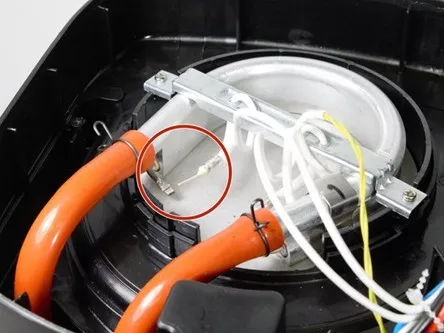
1. Coffee Makers & Kettles
A thermal fuse is mounted directly on the aluminum heating tube or hot plate to quickly detect overheating, and is covered with a white fiberglass or silicone sleeve to prevent short circuits with nearby components.
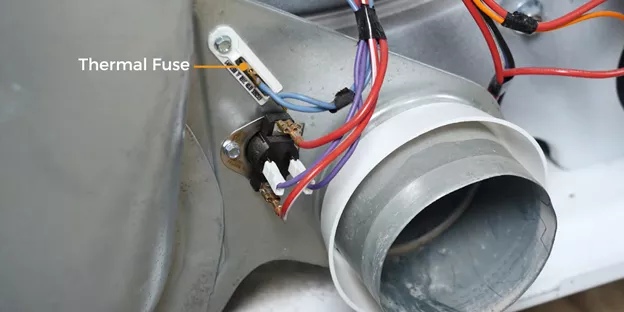
2. Clothes Dryers
- The thermal fuse is a white plastic-housed component
- It is mounted on the blower housing or heating element duct
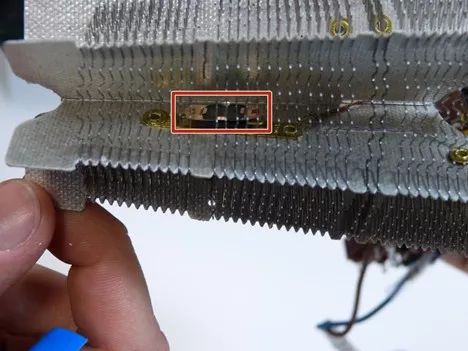
3. Hair Dryers
- Hair dryers use very small axial thermal fuses that look like small silver cylinders
- They are placed directly inside the mica-insulated heating coil
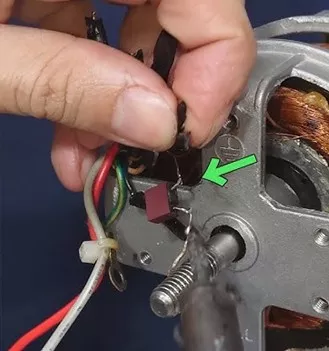
4. Electric Motors (Fans & Blenders)
- The thermal fuse is sewn into the copper windings or strapped to the stator inside the motor
- This position ensures it directly detects overheating in the motor
Advantages of Thermal Fuses
- Fire Prevention — Stops heating elements from overheating and prevents fires
- Highly Reliable — Reacts only to temperature, not current fluctuations
- Cost-Effective — Inexpensive, compact, and easy to implement
- Automatic Operation — Blows automatically without any human intervention
- No Power Required — Passive device, needs no external power to function
Disadvantages of Thermal Fuses
- Non-Resettable — Once blown, it must be replaced — cannot be reset
- Causes Unnecessary Disposal — Blown fuse is often mistaken for complete appliance failure
- Inconvenient Replacement — Requires opening the appliance and soldering a new fuse
- Limited Protection — Reacts only to heat, not to electrical overloads or short circuits
- Cannot Be Welded Normally — Requires specialized welding methods due to heat sensitivity
Limitations of Thermal Fuses
- Fixed Temperature Only — Designed for one specific temperature — not adjustable
- Slower Response — Takes time to react as the casing must heat up first
- Cannot Handle High Current Alone — Must be used with other protection components
- Location Sensitive — Must be placed directly near the heat source to work effectively
Difference Between Thermal Fuse and PPTC
| Feature | Thermal Fuse | PPTC (Resettable Fuse) |
|---|---|---|
| Symbol | 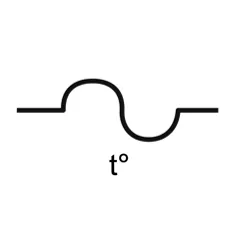 | 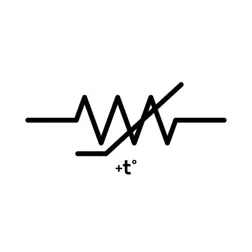 |
| Picture | 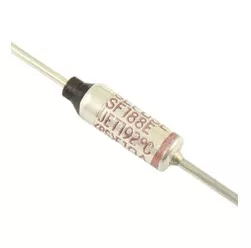 | 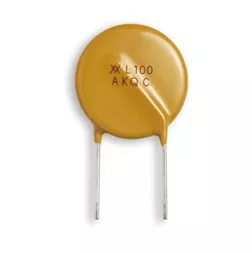 |
| Reset ability | One-time use. Must be replaced once it trips. | Self-resettable. Resets once the fault is cleared and it cools down. |
| Primary Trigger | Ambient Temperature (Heat). | Overcurrent (which causes internal heating). |
| Response Type | Permanent physical break in the circuit. | High resistance (limits current, doesn't fully stop it). |
| Voltage/Current | Often high (up to 250V / 15A+). | Generally lower (usually <100V). |
| Typical Cost | Very low. | Moderate. |
| Design Role | Final safety layer (prevents fires). | Circuit protection (prevents component damage). |
| Installation | Harder; requires crimping or heat-sink soldering. | Easier; standard soldering/SMT mounting. |
Apart from Thermal fuse, there is also Thermal cutoffs/ Breaker- which are resettable.
Littelfuse Mini Breaker (Thermal Cutoffs)
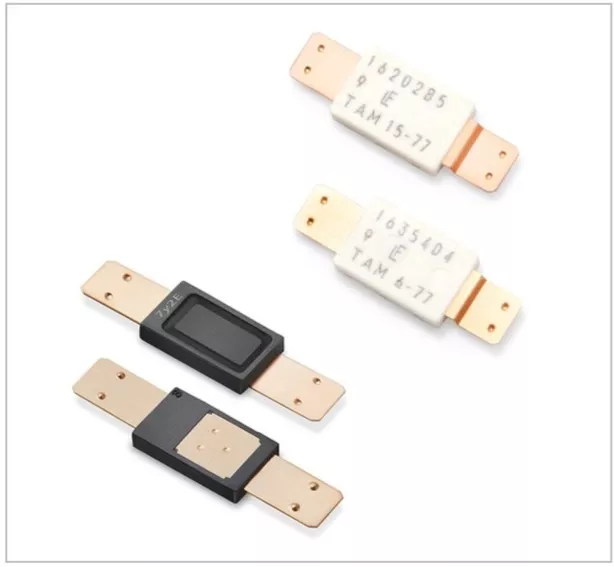
What is a Mini Breaker (thermal cutoff)?
A Mini Breaker, is a resettable thermal cutoff that provides both overcurrent and overtemperature protection for rechargeable battery packs.
Unlike a traditional thermal fuse (which is one-time-use), thermal cutoff is resettable — it automatically restores the circuit once the fault condition is removed and the device cools below its reset temperature.
How Does It Work?
Normal Operation: The bimetallic contact is closed, current flows through the low-resistance bimetal path (~5 mΩ or less), and the PPTC element is effectively bypassed. The device adds negligible resistance to the circuit.
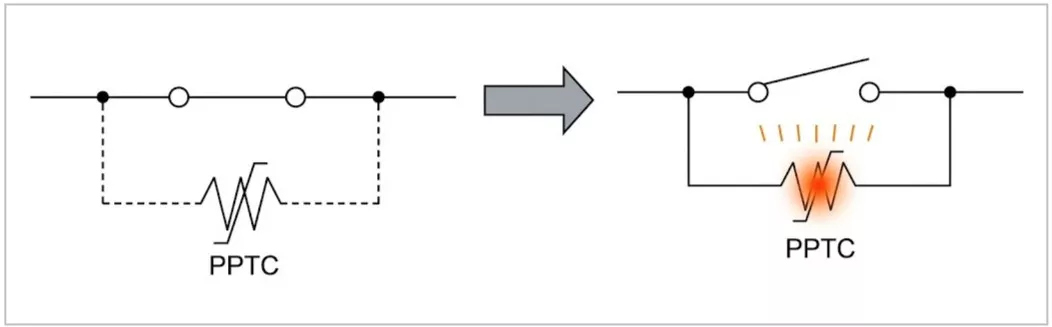
Fault Condition (Overtemperature or Overcurrent):
- When the cell or environment temperature exceeds the activation threshold (e.g., 72°C–90°C), or excessive current heats the device, the bimetallic element trips open, breaking the circuit.
- Once the bimetal opens, current is forced through the parallel PPTC element, which immediately transitions to a high-resistance state.
- The PPTC acts as a heater, generating enough local heat to keep the bimetal latched open even if the ambient temperature drops slightly. This prevents the bimetal from chattering (repeatedly opening and closing).
- The circuit remains interrupted until the fault is fully removed and the device cools below the reset temperature (≥40°C typical).
Littelfuse MHP Series Comparison
| Specification | MHP-TAM6 | MHP-TAT18 | MHP-TAC |
|---|---|---|---|
| Voltage Rating | 9 VDC | 9 VDC | 12 VDC |
| Hold Current | 6A | 18A | 6A / 15A |
| Max Breaking Current | 40A (5VDC, 100 cycles) | 80A (5VDC, 100 cycles) | 80A (5VDC, 100 cycles) |
| Contact Rating | 9VDC/12A (6000 cycles) | 9VDC/25A (6000 cycles) | 12VDC/25A (6000 cycles) |
| Activation Temps | 72°C, 77°C, 82°C, 85°C, 90°C (±5°C) | 72°C, 77°C, 82°C, 85°C, 90°C (±5°C) | 72°C, 77°C, 82°C, 85°C, 90°C (±5°C) |
| Reset Temperature | ≥40°C | ≥40°C | ≥40°C |
| Max Resistance | 5 mΩ | 5 mΩ | 5 mΩ |
| Size (approx.) | 5.8 × 3.85 × 1.15 mm | Larger footprint than TAM | 4.75 × 2.0 × 0.8 mm |
| Operating Temp Range | -30°C to +100°C | -30°C to +100°C | -30°C to +100°C |
| Target Applications | Tablets, ultrabooks, smartphones | Gaming laptops, high-capacity notebook PCs | Ultrathin battery packs, smartphones, prismatic cells |
| Standards | UL/IEC 60730-1, 60730-2-9 | UL/IEC 60730-1, 60730-2-9 | UL/IEC 60730-1, 60730-2-9 |
Quick selection logic:
- Need 12V rating or ultrathin form factor → MHP-TAC
- Need high current (18A hold) for gaming/high-discharge cells → MHP-TAT18
- Standard 9V battery packs, 6A range → MHP-TAM6
Key Specifications Explained
Activation Temperature — The temperature at which the bimetal trips open. Available from 72°C to 90°C in 5°C increments. Choose based on the battery cell's maximum safe operating temperature (typically specified in the cell datasheet).
Reset Temperature (≥40°C) — The device doesn't reset until it cools below this threshold AND the fault is removed. The ΔT requirement (7°C or 10°C depending on variant) means the device must cool at least 7–10°C below its activation temperature before resetting.
Hold Current — Maximum steady-state current the device carries without tripping. Available at 6A (TAM/TAC) and 18A (TAT18).
Max Breaking Current — The maximum fault current the device can safely interrupt. Important for short-circuit scenarios in battery packs.
Resistance (≤5 mΩ) — Very low insertion loss in normal operation. Negligible voltage drop and power dissipation in the current path.
Leakage Current (150mA max @ 25°C for TAC) — Current that may flow through the PPTC path when the bimetal is open. Important for ensuring the battery is effectively disconnected during a fault.
Primary Applications
Li-ion / LiPo Battery Pack Protection — The primary use case. Placed in series with the cell in the battery pack assembly, typically welded via nickel tabs or soldered to the pack PCB. Protects against thermal runaway, charging faults, and overcurrent discharge.
Notebook PCs and Ultrabooks — Multi-cell packs with high energy density require both overcurrent and overtemperature cutoff. MHP devices are compact enough to fit within the thin pack profiles.
Smartphones and Tablets — The MHP-TAC series at 4.75 × 2.0 × 0.8 mm fits inside prismatic cell assemblies for mobile devices.
Power Tools — High-discharge battery packs in power tools benefit from the MHP-TAT18's 18A hold current rating.
E-cigarettes and Portable Devices — Compact battery-powered devices where cell safety is critical and space is extremely limited.
MHP vs. Traditional Thermal Fuse — Key Differences
| Feature | Thermal Fuse (TCO) | Mini Breaker (MHP) |
|---|---|---|
| Resettable? | No — one-time use, must be replaced | Yes — auto-resets after fault clears |
| Protection Type | Overtemperature only | Overtemperature + Overcurrent |
| Mechanism | Fusible alloy or pellet melts | Bimetal + PPTC hybrid |
| Latch Behavior | Permanent open | Latched by PPTC heater until fault clears |
| Typical Application | Appliances, motors, transformers | Rechargeable battery packs |
| Size | Varies (often larger) | Very compact (SMD, <2mm thin) |
| Steady-State Resistance | Very low | Very low (~5 mΩ) |