41. RGB LED Selection
1. Component Purpose
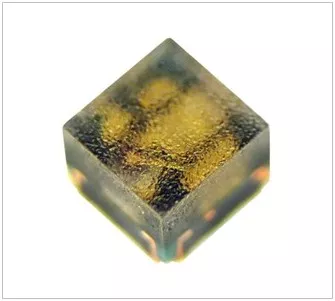
An RGB LED combines red, green, and blue LED dies in a single package. By turning different dies ON, the MCU can show multiple colors from one component: red for fault, green for normal, blue for communication. Mixing colors (e.g., red + green = yellow) gives even more states.
A common cathode configuration means all three dies share one ground pin, and each color has its own anode pin — 4 pins total. The MCU drives each anode through a separate series resistor.
The 5050 package (5mm × 5mm) is a standard SMD RGB LED size with good brightness and well-defined pinout.
Required: RGB · Common Cathode · 4-Pin · 4-SMD· SMD · 20mA per color · −40°C to +85°C · RoHS
2. How to Find It on DigiKey
Go to DigiKey.com → Optoelectronics → LED Indication - Discrete
Apply these filters:
- Color → Red, Green, Blue (RGB)
- Configuration → Common Cathode
- Package / Case → 4-SMD
- Mounting Type → Surface Mount
- Part Status → Active
Important: Common Cathode and Common Anode are NOT interchangeable. Common Cathode has shared ground (MCU sources current to each color). Common Anode has shared VCC (MCU sinks current). The circuit design must match. This task requires Common Cathode.
3. Key Specifications & What They Mean
| Specification | Required | Why |
|---|---|---|
| LED Type | RGB | Three colors in one package. |
| Configuration | Common Cathode | Shared ground; individual color anodes. |
| Pins | 4 | 1 cathode + 3 anodes (R, G, B). |
| Package | 4-SMD | Standard 5mm×5mm RGB LED size. |
| Test Current | 20mA per color | Standard brightness per die. |
| Temp Range | −40°C to +85°C | Industrial operating conditions. |
| RoHS | Yes | Compliance required. |
Tip: Each color has a different forward voltage. Red is typically 1.8–2.4V; green and blue are 2.8–3.4V. You need a separate series resistor for each color, calculated using its specific Vf.
4. Selecting a Safe, Production-Ready Part
The filtered list will show matching parts. Before you pick one, check: Is it Active? Is stock available? Is the manufacturer reputable? Is a datasheet available?
Full checklist: How to Select a Safe, Production-Ready Component — EWskills Guide
5. Filtered DigiKey Link
➡ View Matching Parts — RGB, Common Cathode, 4-Pin, 5050, SMD