15. Inductor Basics
Question.1
Shantanu is repairing a DC-DC buck converter that originally used a 10 µH power inductor rated for 3 A.
Unable to source the original part quickly, he substitutes it with a ferrite bead of similar size, rated 120 Ω @ 100 MHz, 3 A max.
After powering up, the converter fails to regulate properly.
What is the most likely reason?
What is an Inductor?
An inductor is a passive two-terminal component that stores energy in a magnetic field when current flows through it. Its core property is inductance (L), measured in Henries (H), typically used in microhenries (μH) or millihenries (mH).
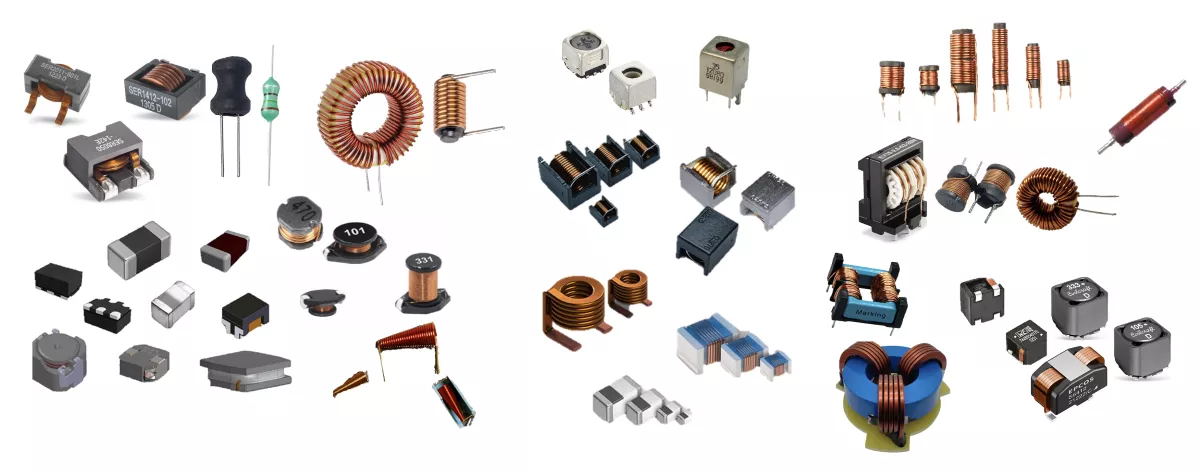
The voltage across an inductor is defined by the equation:
V = L (dI/dt)
This means that inductors oppose changes in current, making them ideal for filtering, energy storage, and noise suppression.
Practical Use Cases of Inductors
Inductors are used in a wide range of embedded and power electronics applications:
- DC-DC Converters (Buck/Boost/SEPIC): Energy storage between switching phases
- Power Supply Filters: Smooth current and suppress ripple
- EMI Suppression: Block high-frequency noise in power or signal lines
- RF Circuits: Used in matching networks, resonant circuits, and filters
- Load Isolation: Isolate noisy loads (e.g., motors, relays) from sensitive circuits
- Transformers & Coupled Inductors: Provide isolation or step-up/down functions in converters
Types of Inductors
Inductors are categorized by construction, application, and core material. Here are the most common practical types:
A. Based on Application
| Type | Description | Applications | Photo |
| Power Inductors | High current handling, ferrite/iron core | Buck/Boost converters, SMPS | 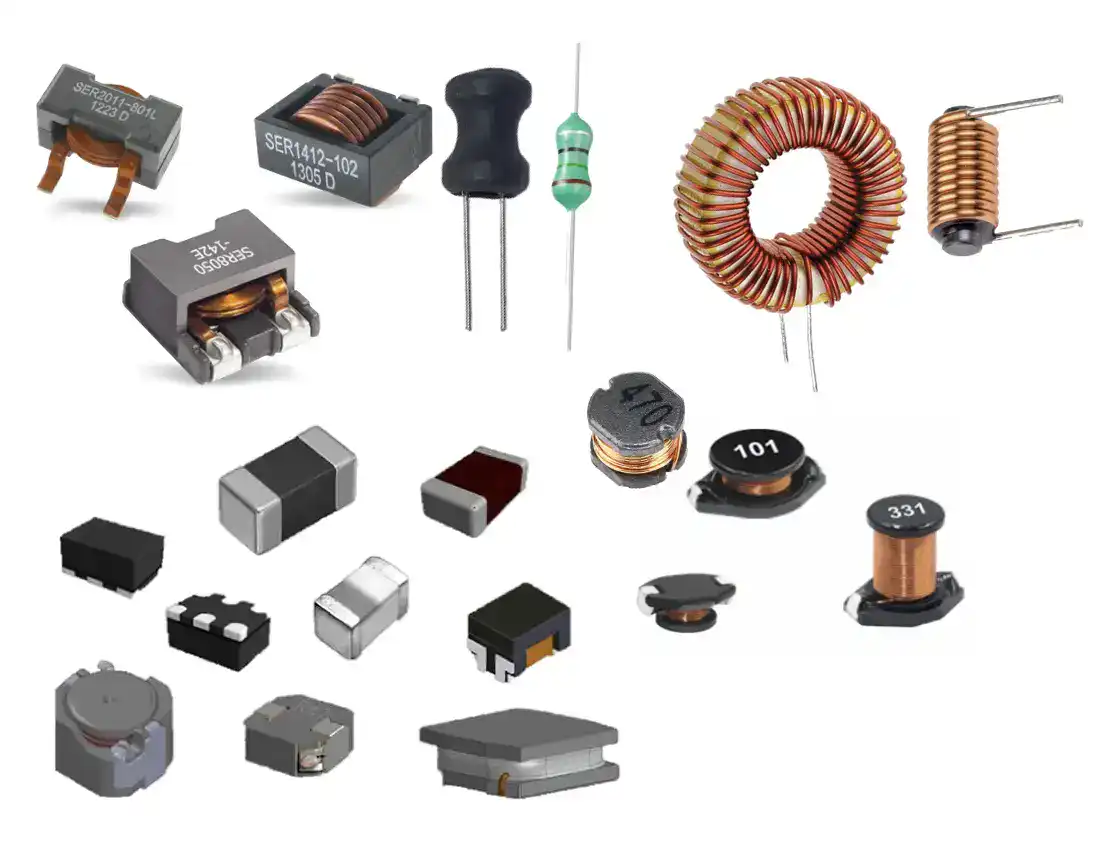 |
| RF Inductors | Low-loss, small inductance, high-Q | RF filters, matching networks | 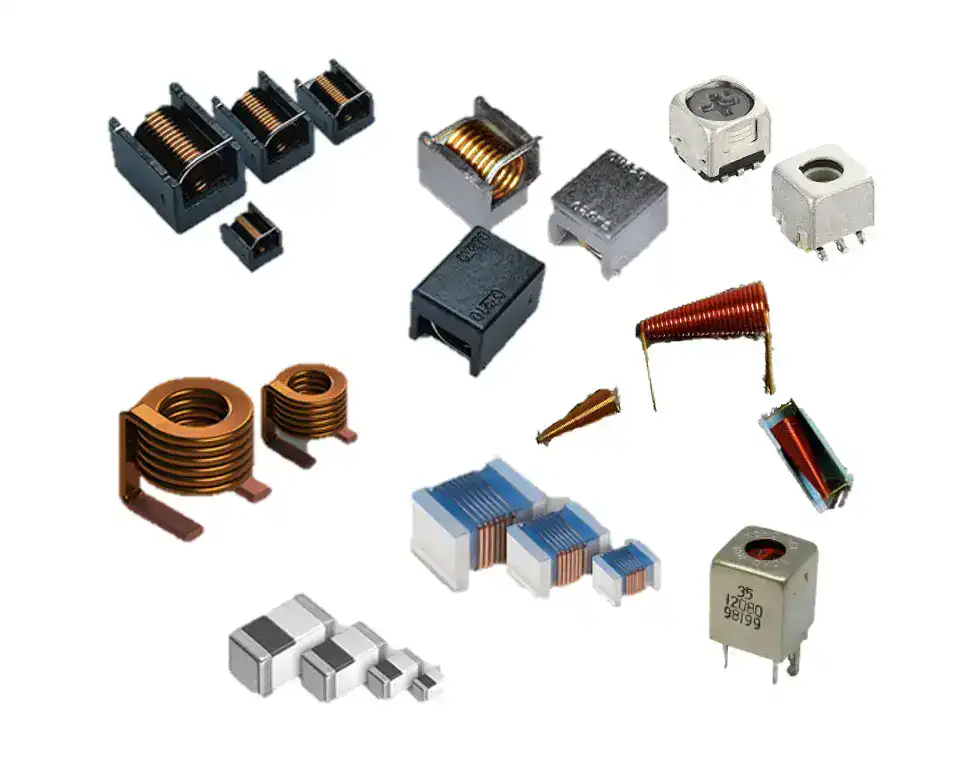 |
| Chokes | EMI suppression, noise filtering | DC input filtering, common-mode | 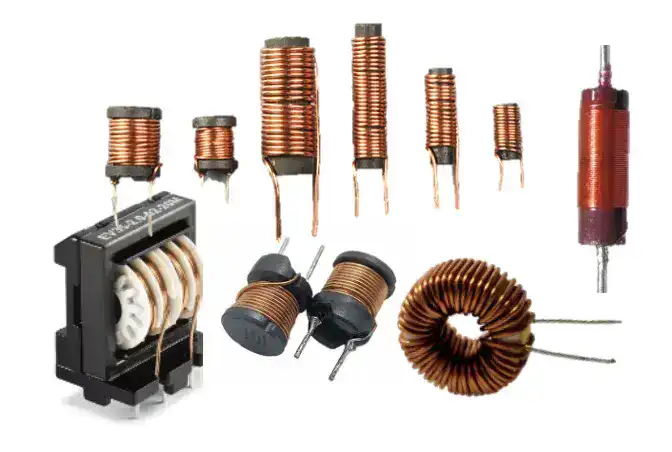 |
| Coupled Inductors | Multiple windings for energy transfer | Flyback, SEPIC, transformers | 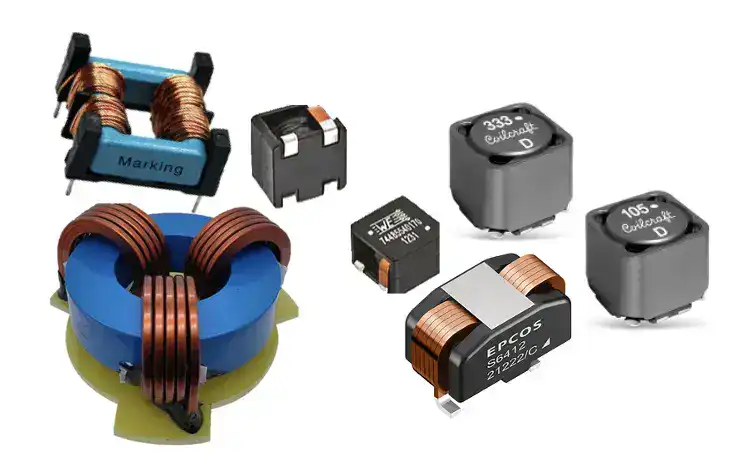 |
B. Based on Core Material
| Core Material | Characteristics | Usage | Photo |
| Air Core | Linear, no saturation, low inductance | RF circuits | 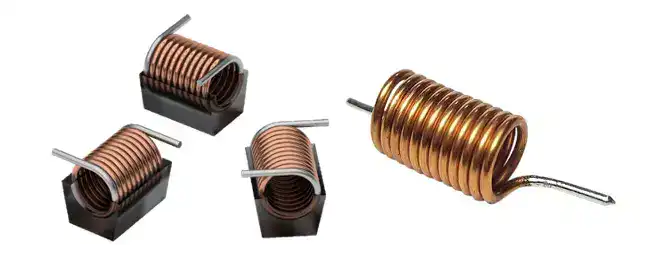 |
| Ferrite Core | High permeability, low loss, and saturates easily | Power inductors, chokes | 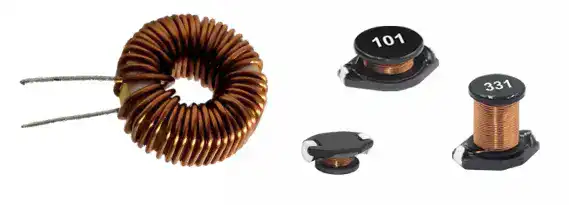 |
| Iron Powder | Soft saturation, good for high current | High-power converters | 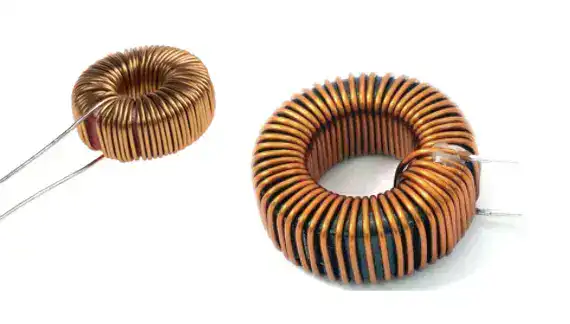 |
| Laminated Core | Used in transformers, line-frequency | Isolation transformers | 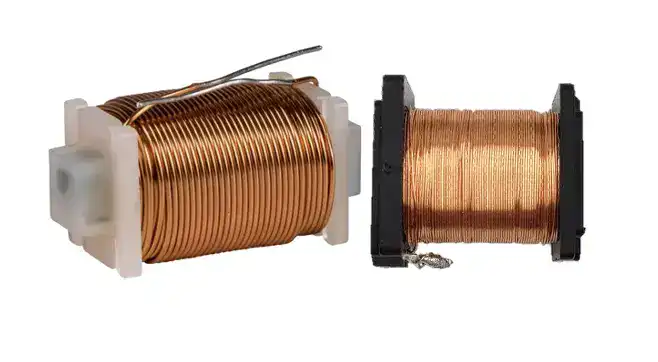 |
Inductor Value Identification
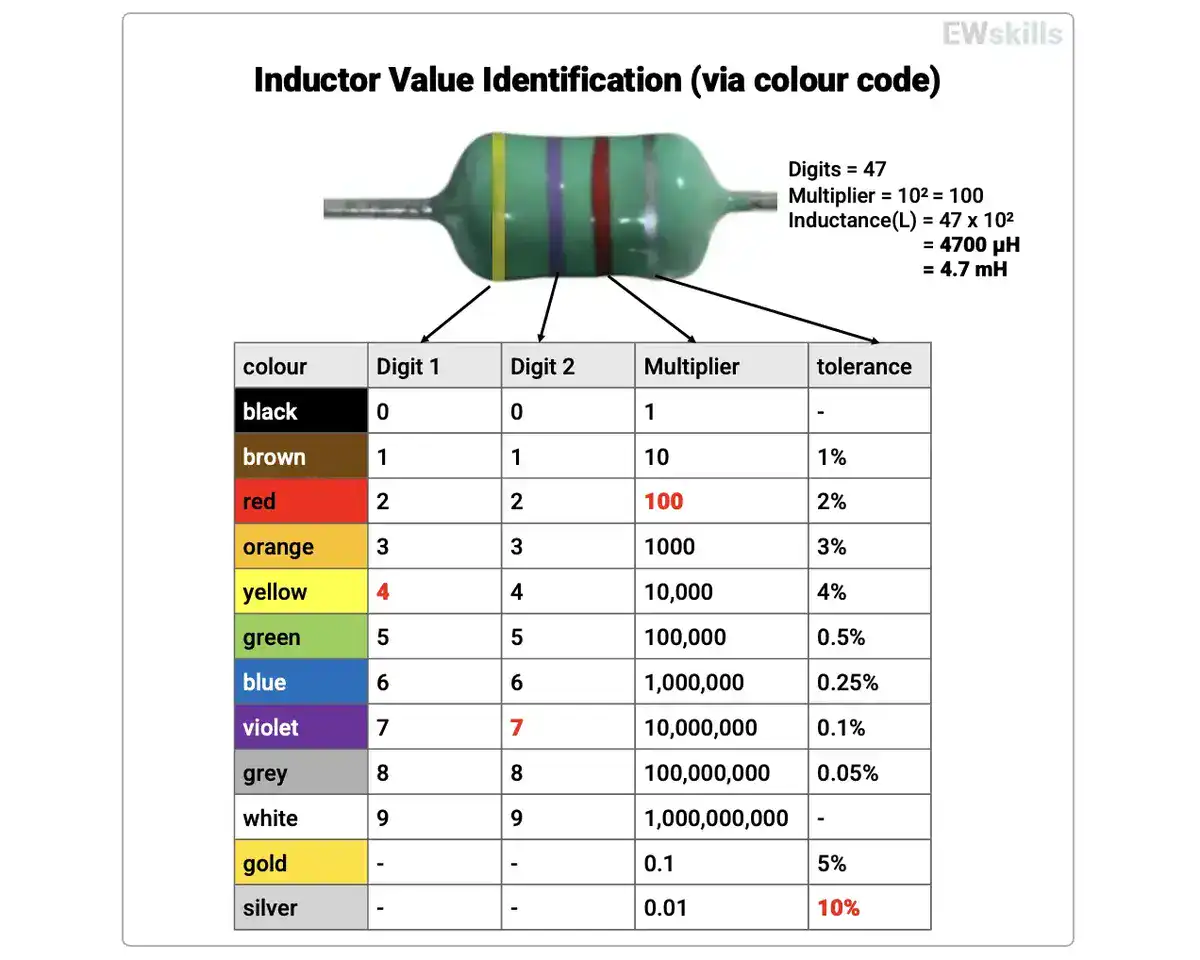
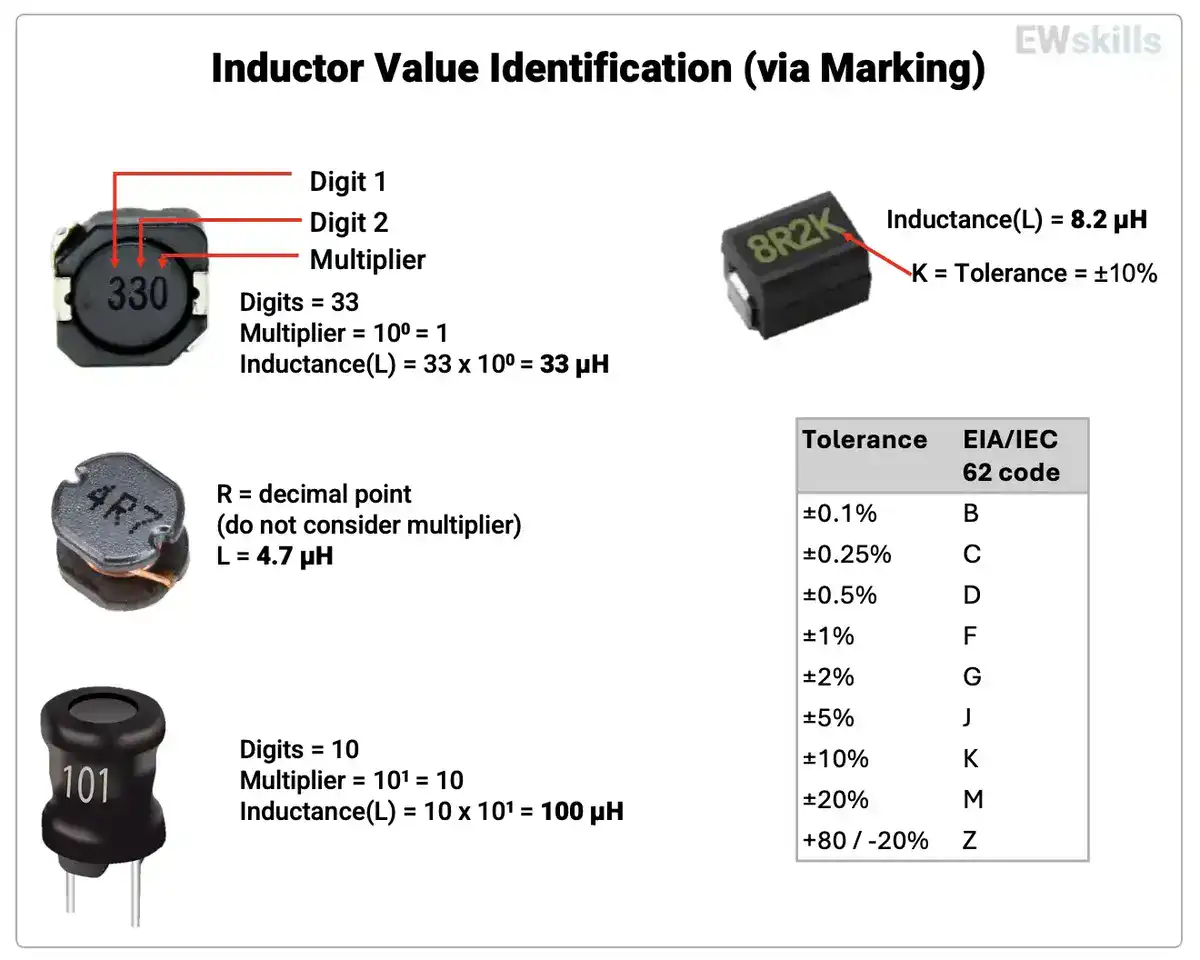
Inductor Circuit Symbols
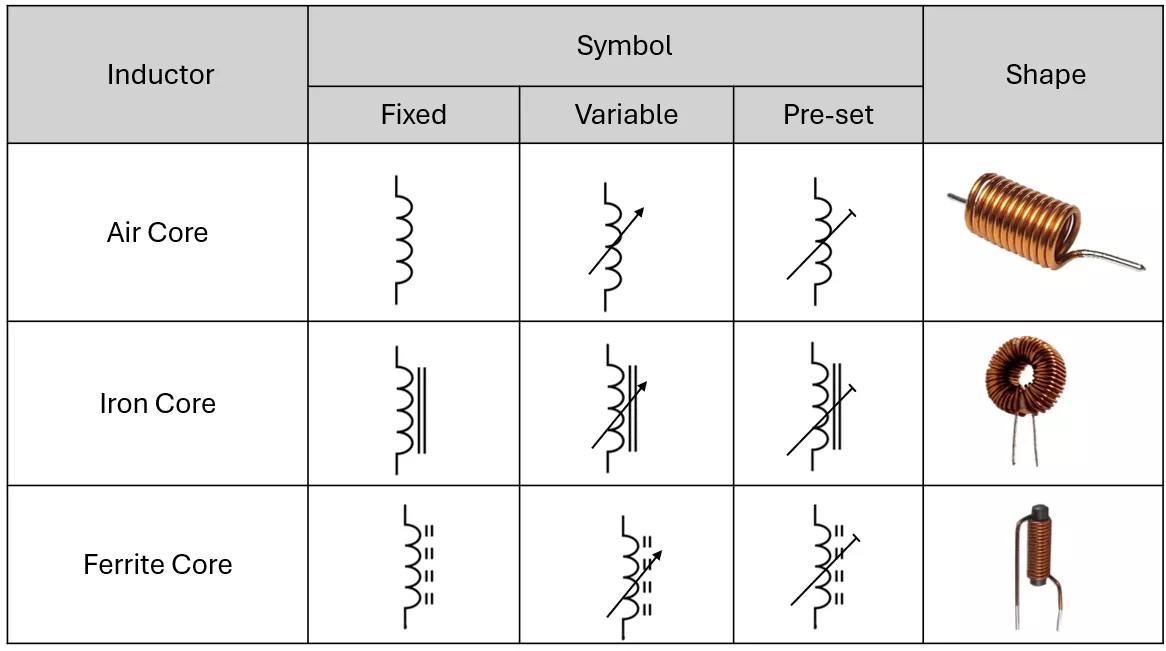
Key Inductor Specifications
1. Inductance (L)
- Measured in Henry (H), typically μH or mH
- Choose a value based on the converter frequency and, desired current ripple
2. Saturation Current (Isat)
- Maximum current before the core saturates and the inductance collapses
- Exceeding this leads to performance degradation or damage
3. Rated Current (Irms)
- Maximum current without exceeding temperature rise (typically 40°C)
- Choose with a thermal margin
4. DCR (DC Resistance)
- Series resistance of the winding affects efficiency and heat
- Lower DCR = better for power efficiency
5. Q Factor (Quality Factor)
- Ratio of reactance to resistance; higher Q = better for RF
- Used in filters, oscillators
6. Self-Resonant Frequency (SRF)
- Frequency where inductor becomes capacitive (no longer effective)
- Stay well below SRF in application
7. Core Material & Type
- Affects saturation, efficiency, and losses
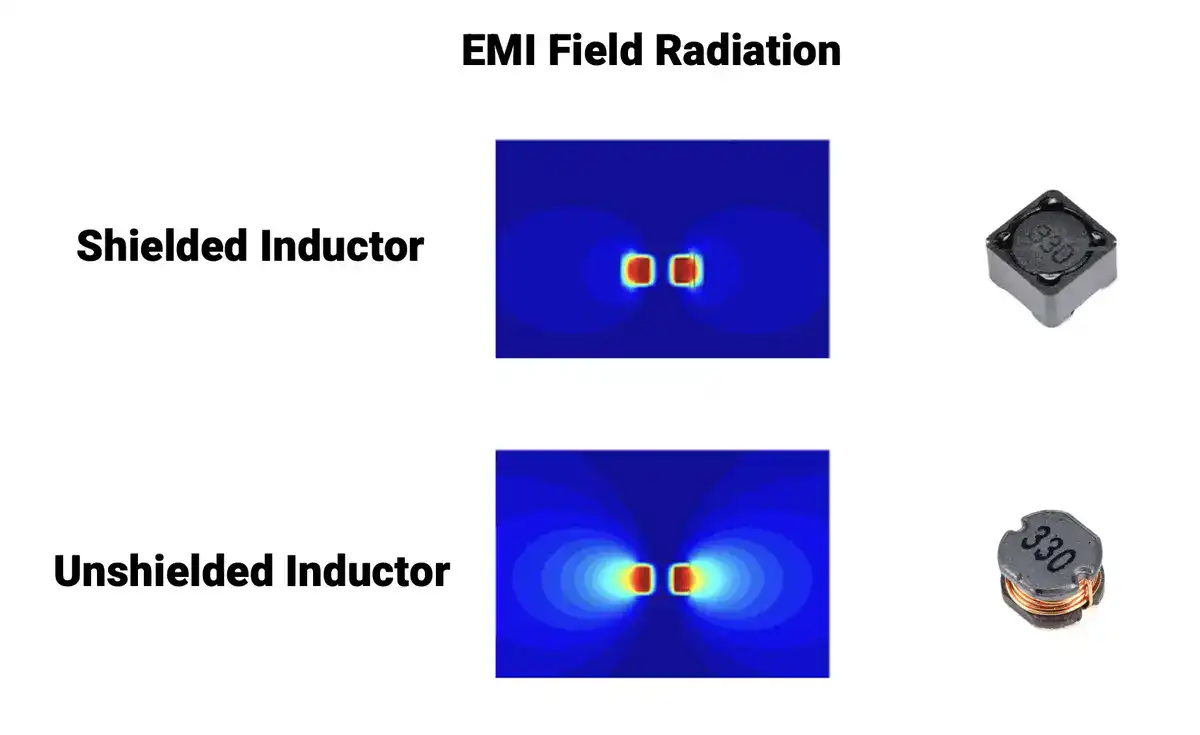
8. Shielding
- Shielded: Confines magnetic field, reduces EMI
- Unshielded: Cheaper, more magnetic leakage
Ferrite Bead Inductors (Ferrite Beads)
A ferrite bead is a passive component made of ferrite material (ceramic with iron oxide).
It blocks high-frequency noise while allowing DC or low-frequency signals to pass.
Works like a frequency-dependent resistor low impedance at low frequencies, high impedance at high frequencies (e.g., MHz range).
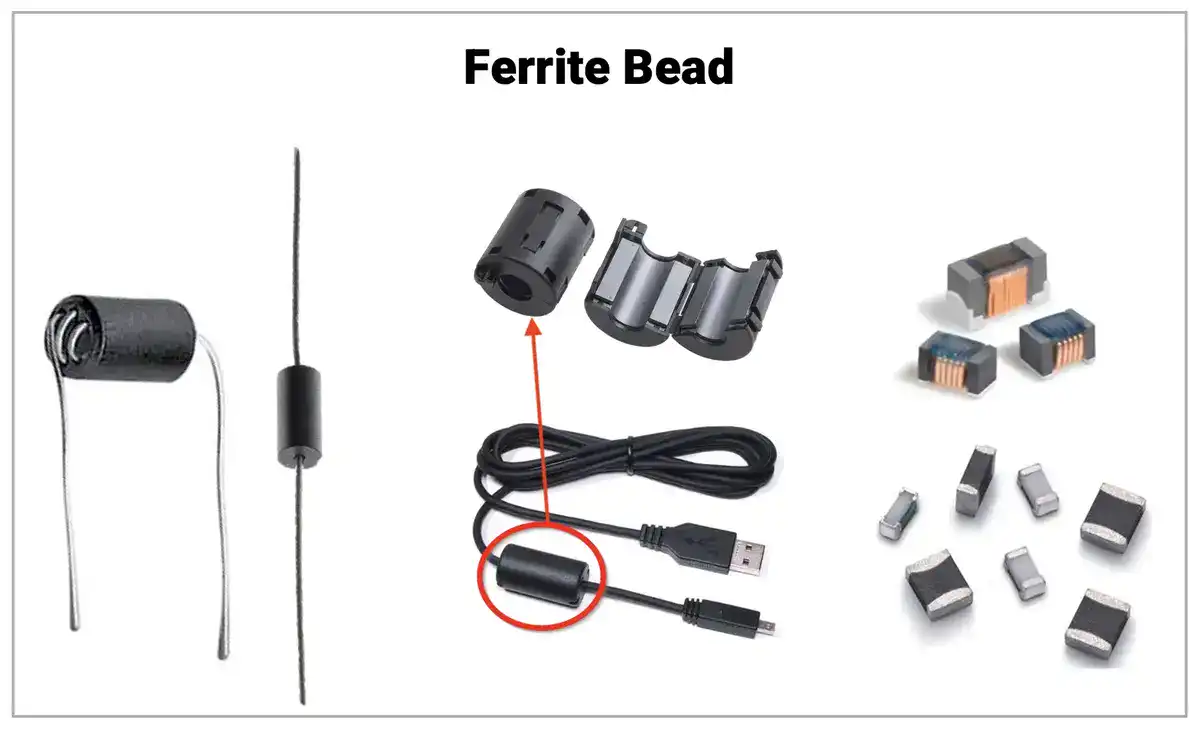
Where It’s Used
Used mainly for EMI suppression in power lines and signal lines
- On power rails (e.g., Vcc, 3.3 V) to filter switching noise.
- In USB, HDMI, or audio lines to block high-frequency interference.
- Placed in series with the signal or power path.
Is Ferrite Bead a Power Inductor?
Ferrite beads and inductors are physically similar, but electrically very different. They are used for high-frequency noise suppression, not for storing energy
Ferrite beads offer minimal inductance at low frequencies and cannot function as an energy storage component.
Tip : When choosing a ferrite bead, check its impedance vs. frequency graph to match the noise frequency you want to suppress.
Shielded vs Unshielded Inductor
Shielded Inductors
- The magnetic field is contained inside using a magnetic shield (like ferrite or a metal case).
- Less EMI (Electromagnetic Interference) to nearby components.
- Slightly larger and more expensive.
- Ideal for EMI-sensitive circuits like analog/RF sections and switching regulators.
Unshielded Inductors
- Open magnetic field, no shielding around the core.
- More EMI can interfere with nearby circuits.
- Smaller, cheaper, and used when EMI is not a concern.
- Common in basic power supply filtering, where space and cost are priorities.
How to Select an Inductor?
Inductors are used for many purposes, like filtering, energy storage, noise suppression, or tuning circuits. Here’s how to pick one based on your application:
- Power Circuits (like buck/boost converters or voltage regulators)
- Use a power inductor. It stores energy and smooths current.
- Irms > load current (+ 30% to 50% headspace).
- Low DCR (DC resistance) reduces heat and power loss
Note: In a few SMD inductors, Isat < Irms. In that case, make sure the Isat > load current (+ at least 20% headspace).
- High-Frequency EMI (noise on power or signal lines):
- Use Farrite Bead = blocks high-frequency noise.
- Shielded inductors = reduce EMI interference.
- (Farrite bead) Check the impedance vs. frequency chart = it should have high impedance at the noise frequency.
- RF or Tuning Circuits (like radios or oscillators):
- Use high-Q inductors designed for high frequencies.
- Higher Q = lower loss.
- Ensure SRF is well above your operating frequency.
- Input/Output Filtering (to reduce ripple or spikes):
- Use an inductor in series with the power line. Reduces ripple in DC-DC converters.
- For better performance, combine it with capacitors to form LC filters.
- Common Mode Noise (on differential lines or USB/Ethernet)
- Use a common-mode choke – it filters noise that's present equally on both lines without affecting the signal.
Also consider size, mounting type (SMD or through-hole), temperature rating, and cost.
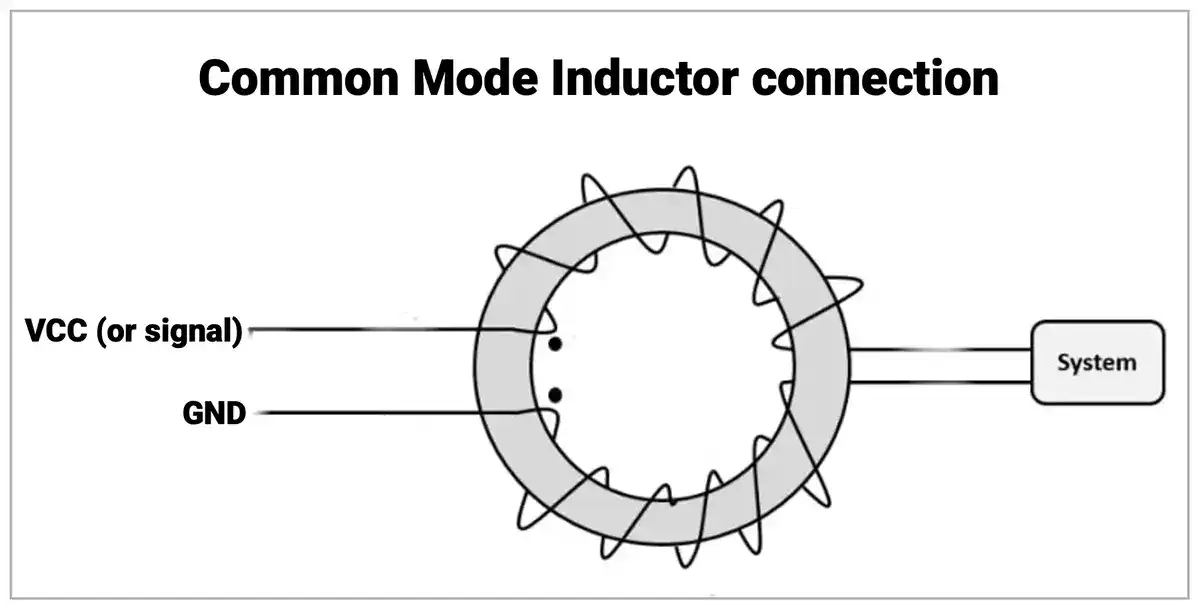
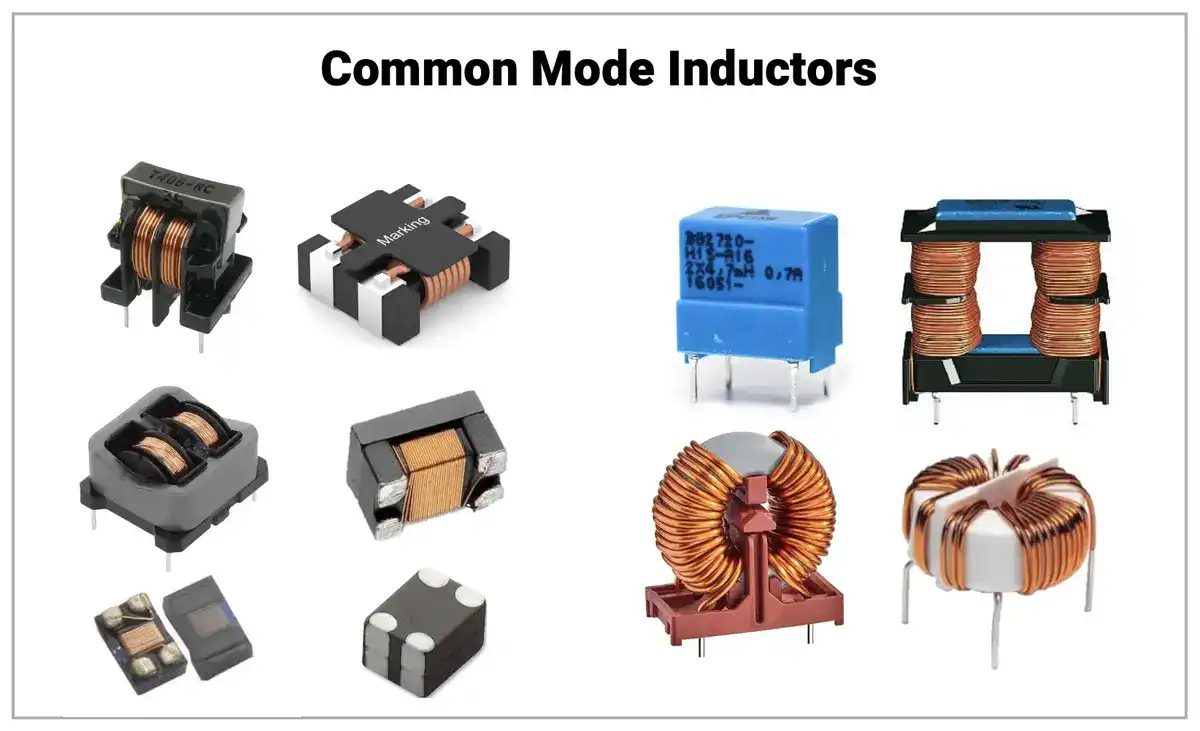
Common mode noise
Common-mode noise is unwanted electrical noise that appears equally on both lines (like VCC and GND) with respect to ground. It flows in the same direction on both wires and usually comes from external sources like nearby motors or radio signals.
Eliminating CMN
Here, common-mode inductors are used. It has 2 coils around the same magnetic core.
Both VCC (or signal) and ground lines pass through the same magnetic core, eliminating common-mode noise.
Inductor Packages and Footprints
Inductors come in both SMD and through-hole forms. Selection depends on the current level, size constraints, and assembly process.
0603, 0805, 1210: Small signal applications, RF circuits, smartphones, laptops.
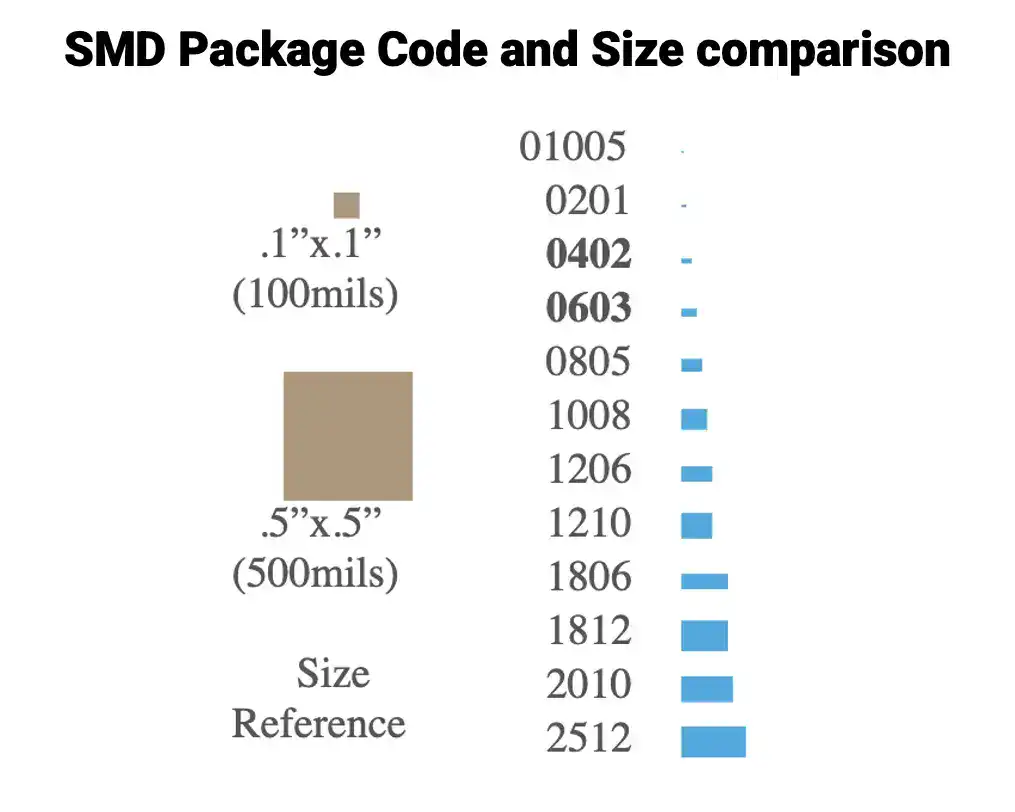
- Power SMD Inductors (larger size): Used in switching regulators, power converters.
- Shielded SMD inductors (e.g., drum core, toroidal) are preferred in power applications to reduce EMI.
- High-current SMD inductors come in molded or metal composite cases with thermal pads underneath.
Through-Hole Inductors
- Radial Inductors: Used in power supplies or low-frequency filters
- Toroidal Inductors: Efficient, low EMI, common in high-current DC filters
Real-World Design Examples
Buck Converter Output Inductor
- Choose 10μH to 47μH based on switching frequency and desired ripple
- Example: For 1MHz switching, 10μH, 4A saturation current, 30mΩ DCR
EMI Line Filter (Input Choke)
- Common-mode choke with dual winding
- Ferrite core, high impedance at high frequencies
RF LC Bandpass Filter
- Inductor: 47nH with high Q, ceramic SMD type
- Keep traces short, match impedance
Snubber Inductor
- For suppressing spikes in relay/motor switching circuits
- Low DCR, air core, or iron powder