
31. AC Rectifier Diode Selection
1. Component Purpose
The board receives 24VAC from a transformer. AC voltage swings both positive and negative, but the board’s circuits need steady DC. A rectifier diode converts AC to DC by allowing current to flow in only one direction.
The peak voltage of 24VAC is 24 × 1.414 = ~34V peak. In a bridge rectifier, each diode sees the full peak voltage in reverse. With safety margin, the diode needs ≥200V reverse rating to handle surges and transients on the AC line reliably.
Required: General Purpose Rectifier · ≥1A · ≥200V · SMA · SMD · −40°C to +125°C · RoHS
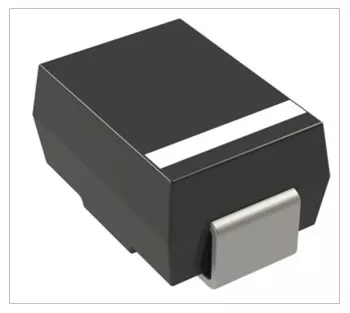
2. How to Find It on DigiKey
Go to DigiKey.com → Discrete Semiconductor Products → Diodes → Rectifiers → Single Diode
Apply these filters:
- Diode Type (Technology) → Standard
- Voltage - DC Reverse (Vr) → 200V or higher
- Current - Average Rectified (Io) → 1A or more
- Supplier Device Package → SMA (DO-214AC)
- Part Status → Active
Tip: For AC rectification, always calculate peak voltage (Vrms × 1.414) and add generous margin. AC mains can have transient spikes well above normal peak.
3. Key Specifications & What They Mean
| Specification | Required | Why |
| Diode Type | General Purpose Rectifier | Standard rectifier for AC-to-DC conversion. |
| Avg Current (Io) | ≥1A | Matches the rectifier section’s current. |
| Reverse Voltage (Vr) | ≥200V | 24VAC peak is ~34V; 200V covers surges. |
| Package | SMA | Standard SMD package for 1A diodes. |
| Temp Range | −40°C to +125°C | Industrial operating conditions. |
| RoHS | Yes | Compliance required. |
4. Selecting a Safe, Production-Ready Part
The filtered list will show many matching parts. Before you pick one, check: Is it Active? Is stock available? Is the manufacturer reputable? Is a datasheet available?
Full checklist: How to Select a Safe, Production-Ready Component — EWskills Guide
5. Filtered DigiKey Link
➡ View Matching Parts — Rectifier, SMA, ≥1A, ≥200V