
50. Door Reed Switch Selection
1. Component Purpose
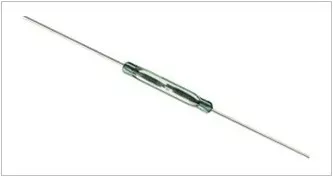
A reed switch is a magnetically activated switch sealed inside a glass tube. When a magnet comes close enough, the internal reed contacts pull together and close the circuit.
For enclosure door detection, the magnet is mounted on the door and the reed switch on the PCB (or frame). When the door is closed, the magnet is near the switch and the circuit is closed. When the door opens, the magnet moves away and the switch opens.
The controller reads this as a simple digital input: door open or door closed. No mechanical lever, no physical contact with the door — just magnetic proximity.
Required: Glass Body Reed · SPST-NO · 10–20 AT operate range · ≥24VDC · Axial · Through Hole
2. How to Find It on DigiKey
Go to DigiKey.com → Switches → Magnetic, Reed Switches
Apply these filters:
- Type → Glass Body
- Circuit → SPST-NO
- Operate Range → 10 ~ 20 AT
- Voltage - Switching DC → 24V or higher
- Mounting Type → Through Hole
- Termination Style → Axial
- Part Status → Active
Tip: AT (Ampere-Turns) is the unit for magnetic sensitivity. A lower AT range means the switch activates with a weaker magnet or at a greater distance. 10–20 AT is a common mid-range sensitivity suitable for door gaps of a few millimeters.
3. Key Specifications & What They Mean
| Specification | Required | Why |
|---|---|---|
| Type | Glass Body Reed | Standard hermetically sealed reed switch. |
| Circuit | SPST-NO | Normally open; closes when magnet is near. |
| Operate Range | 10–20 AT | Mid-range sensitivity for door-gap distance. |
| Switching Voltage | ≥24VDC | Must handle 24V sensing circuit. |
| Termination | Axial, Through Hole | Wire-like leads for PCB or chassis mount. |
| Temp Range | −40°C to +85°C | Industrial enclosure conditions. |
4. Selecting a Safe, Production-Ready Part
The filtered list will show matching parts. Before you pick one, check: Is it Active? Is stock available? Is the manufacturer reputable? Is a datasheet available?
Full checklist: How to Select a Safe, Production-Ready Component — EWskills Guide
5. Filtered DigiKey Link
➡ View Matching Parts — Glass Reed, SPST-NO, 10–20AT, ≥24VDC, Axial