
49. End-Stop Limit Switch
1. Component Purpose
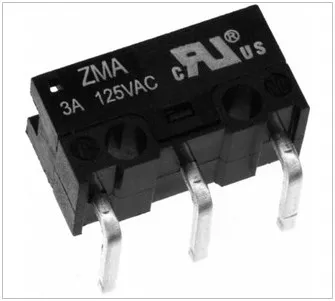
In a linear motion system (e.g., a CNC axis, 3D printer bed, or actuator), the mechanism must stop at the end of its travel. A limit switch detects when the moving part reaches the end position.
When the mechanism presses the lever, the switch actuates and sends a signal to the controller, which then stops or reverses the motor. This prevents mechanical damage from over-travel.
A snap-action (microswitch) mechanism gives a crisp, repeatable switching point with very low hysteresis — important for accurate position detection.
Required: SPDT · On-Mom · Lever Straight · ≥2A DC · ≥24VDC · 50–120gf · ≥1M cycles · Through Hole
2. How to Find It on DigiKey
Go to DigiKey.com → Switches → Snap Action, Limit Switches
Apply these filters:
- Circuit → SPDT
- Switch Function → On-Mom
- Actuator Type → Lever, Straight
- Current Rating (Amps) → 2A or higher
- Voltage Rating - DC → 24V or higher
- Mounting Type → Through Hole
- Part Status → Active
Tip: Operating force matters for limit switches. 50–120gf is light enough that the mechanism doesn’t need to push hard, but firm enough for reliable actuation. Too light and it may false-trigger from vibration.
3. Key Specifications & What They Mean
| Specification | Required | Why |
|---|---|---|
| Circuit | SPDT | Gives both NO and NC outputs. |
| Switch Function | On-Mom | Momentary; returns when lever released. |
| Actuator | Lever, Straight | Lever arm extends for easy mechanical contact. |
| Current Rating | ≥2A DC | Handles 24V DC control circuit load. |
| Voltage Rating | ≥24VDC | Matches control circuit voltage. |
| Operating Force | 50–120gf | Light enough for mechanism; resists vibration. |
| Mech. Life | ≥1,000,000 cycles | High endurance for repetitive motion systems. |
| Mounting | Through Hole, PC Pin | Soldered to PCB or panel-mounted. |
| Temp Range | −40°C to +85°C | Industrial operating conditions. |
4. Selecting a Safe, Production-Ready Part
The filtered list will show matching parts. Before you pick one, check: Is it Active? Is stock available? Is the manufacturer reputable? Is a datasheet available?
Full checklist: How to Select a Safe, Production-Ready Component — EWskills Guide
5. Filtered DigiKey Link
➡ View Matching Parts — Snap Action, SPDT, Lever Straight, ≥2A, ≥24VDC