
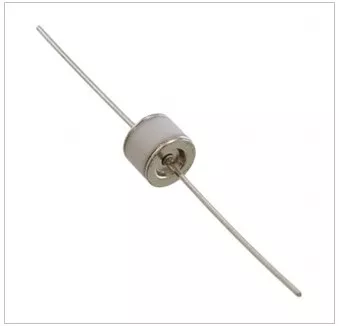
46. GDT for 230VAC Mains Primary Surge Protection
1. Component Purpose
In a multi-stage surge protection device (SPD), the GDT serves as the first stage — it handles the bulk of the lightning surge energy. A downstream MOV (second stage) then clamps the residual transient to a safe level.
The 230VAC mains has a peak voltage of ~325V. With +10% grid tolerance, worst-case peaks reach ~360V. The GDT’s 470V spark-over is above this worst-case peak, so it will never fire during normal mains operation — only on actual lightning surges.
As first-stage protection, the GDT must handle ≥10kA because it absorbs the majority of the surge energy before any reaches the MOV.
Required: 470V Spark-Over · ≥10kA (8/20µs) · 2-Pole · Through Hole · Littelfuse · RoHS
2. How to Find It on DigiKey
Go to DigiKey.com → Circuit Protection → Gas Discharge Tube Arresters (GDT)
Apply these filters:
- Voltage - DC Spark Over (Nom) → 470V
- Impulse Discharge Current (8/20µs) → 10kA or higher
- Number of Poles → 2
- Mounting Type → Through Hole
- Manufacturer → Littelfuse Inc.
- Part Status → Active
Important: After a GDT fires and the surge passes, the mains AC voltage can sustain an arc through the ionized gas (called "follow-on current"). The circuit must include a current-limiting element (series impedance or coordinating device) to ensure the GDT can extinguish this arc.
3. Key Specifications & What They Mean
| Specification | Required | Why |
|---|---|---|
| Spark-Over Voltage | 470V | Above 230VAC worst-case peak (~360V). |
| Surge Current | ≥10kA (8/20µs) | First stage absorbs bulk of lightning energy. |
| Number of Poles | 2 | Protects Line-Neutral in one package. |
| Mounting | Through Hole | Power-stage mounting; robust connections. |
| Manufacturer | Littelfuse | Company AVL requirement. |
| RoHS | Yes | Compliance required. |
4. Selecting a Safe, Production-Ready Part
The filtered list will show matching parts. Before you pick one, check: Is it Active? Is stock available? Is the manufacturer reputable? Is a datasheet available?
Full checklist: How to Select a Safe, Production-Ready Component — EWskills Guide
5. Filtered DigiKey Link
➡ View Matching Parts — Littelfuse, GDT, 470V, ≥10kA, 2-Pole, Through Hole