
11. MCU Decoupling Capacitor Selection
1. Component Purpose
A microcontroller draws short bursts of current every clock cycle. These fast current spikes cause small voltage dips on the power rail, which can make the MCU behave unpredictably or reset.
A decoupling capacitor placed close to the MCU power pin acts as a tiny local energy reserve. It supplies current during fast spikes and filters high-frequency noise, keeping the 3.3V supply clean and stable.
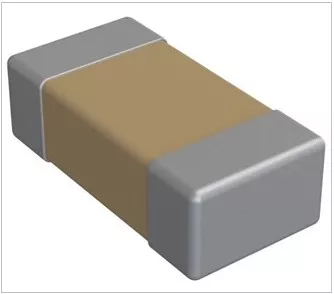
Required: 0.1µF · ±10% · X7R · ≥10V · 0603 · SMD · −55°C to +125°C · RoHS
2. How to Find It on DigiKey
Go to DigiKey.com → Capacitors → Ceramic Capacitors
Apply these filters:
- Capacitance → 100nF (0.1µF)
- Voltage Rated → 10V or 16V (both give enough margin for 3.3V)
- Temperature Coefficient → X7R
- Package / Case → 0603 (1608 Metric)
- Mounting Type → Surface Mount, MLCC
- Part Status → Active
Tip: On DigiKey, the 0603 package appears as "0603 (1608 Metric)" in the dropdown. Both refer to the same size.
3. Key Specifications & What They Mean
| Specification | Required | Why |
|---|---|---|
| Capacitance | 0.1µF (100nF) | Industry standard for MCU decoupling. |
| Tolerance | ±10% | Standard for decoupling; tight tolerance not needed. |
| Dielectric | X7R | Stable across temperature. Avoid Y5V. |
| Voltage Rating | ≥10V | Supply is 3.3V; 10V or 16V gives safe margin. |
| Package | 0603 | Small, fits close to MCU power pin. |
| Temp Range | −55°C to +125°C | Standard ceramic capacitor range. |
| RoHS | Yes | Compliance required. |
Tip: Avoid Y5V dielectric — it loses up to 80% capacitance under DC bias and temperature change. X7R is the standard choice for decoupling.
4. Selecting a Safe, Production-Ready Part
The filtered list will show many matching parts. Before you pick one, check: Is it Active? Is stock available? Is the manufacturer reputable? Is a datasheet available?
Full checklist: How to Select a Safe, Production-Ready Component — EWskills Guide
5. Filtered DigiKey Link
➡ View Matching Parts — 100nF, 0603, X7R, ≥10V