20. MOV for 230VAC Mains Surge Protection
1. Component Purpose
Power lines carry transient voltage spikes from lightning, utility switching, and load changes on the grid. These surges can be thousands of volts and will damage or destroy electronic components.
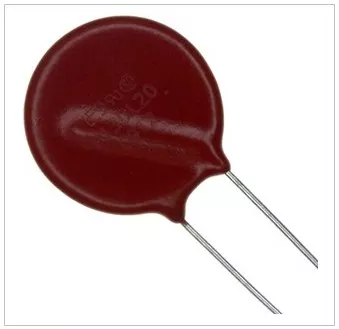
A Metal Oxide Varistor (MOV) is a voltage-dependent resistor. Under normal voltage, it has very high resistance and draws negligible current. When a surge exceeds its clamping voltage, its resistance drops dramatically and it absorbs the surge energy, clamping the voltage to a safe level.
For 230VAC mains, the standard MOV rating is 275VAC maximum continuous. This provides headroom above 230V nominal (which peaks at ~325V) while still clamping effectively. Too low (250V) risks degradation from normal mains peaks; too high (300V+) means the clamp voltage is too high to protect components.
Required: 275VAC · ≥6kA surge · ≥100J · 1-Circuit · Disc · Through Hole · Littelfuse · RoHS
2. How to Find It on DigiKey
Go to DigiKey.com → Circuit Protection → Varistors, MOVs
Apply these filters:
- Maximum AC Volts → 275V
- Current - Surge → 6kA or higher
- Energy → 100J or higher
- Number of Circuits → 1
- Mounting Type → Through Hole
- Package / Case → Disc
- Manufacturer → Littelfuse Inc.
- Part Status → Active
Important: MOVs degrade with each surge they absorb. After many surges, the clamping voltage drops and leakage current increases, eventually leading to thermal runaway. For critical applications, use a MOV with a thermal fuse (thermally protected MOV) or add an external fuse in series.
3. Key Specifications & What They Mean
| Specification | Required | Why |
|---|---|---|
| Max AC Volts | 275V | Standard for 230VAC; headroom above nominal. |
| Surge Current | ≥6kA | Handles standard mains surge transients. |
| Energy | ≥100J | Absorbs repeated surges in industrial use. |
| Circuits | 1 | Single line-to-neutral protection. |
| Package | Disc, Through Hole | Standard MOV form factor. |
| Manufacturer | Littelfuse | Company AVL requirement. |
| Temp Range | −40°C to +85°C | Industrial operating conditions. |
| RoHS | Yes | Compliance required. |
4. Selecting a Safe, Production-Ready Part
The filtered list will show matching parts. Before you pick one, check: Is it Active? Is stock available? Is the manufacturer reputable? Is a datasheet available?
Full checklist: How to Select a Safe, Production-Ready Component — EWskills Guide
5. Filtered DigiKey Link
➡ View Matching Parts — Littelfuse, MOV, 275VAC, ≥6kA, ≥100J, Disc