22. MOV for 24VDC Industrial Bus Surge Protection
1. Component Purpose
On a factory floor, the 24VDC bus shares cable trays with motor power cables, solenoid drivers, and VFDs. These generate fast voltage spikes (transients) that travel along the 24V bus and can damage sensitive sensor interfaces and MCU inputs.
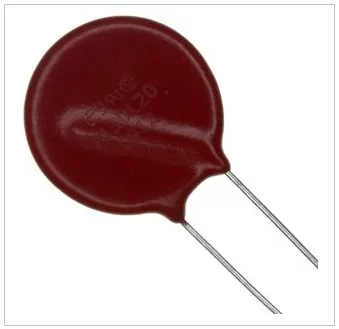
An MOV across the 24V input clamps these transient spikes. The critical design decision is choosing the right MOV voltage rating:
- Too low (≤30V): the MOV may conduct during normal 24V operation (which can reach ~26.4V with +10% tolerance), leading to overheating and failure.
- Too high (≥43V): the clamping voltage is so high that the “clamped” surge still damages 24V-rated components.
- Correct (31V–43V): stays inactive during normal operation, clamps transients to a safe level.
Required: 31V–43V DC · ≥2kA surge · ≥20J · 1-Circuit · Disc · Through Hole · Littelfuse · RoHS
2. How to Find It on DigiKey
Go to DigiKey.com → Circuit Protection → Varistors, MOVs
Apply these filters:
- Maximum DC Volts → 31V to 43V range (select available values: 31V, 36V, 39V, or 43V)
- Current - Surge → 2kA or higher
- Energy → 20J or higher
- Number of Circuits → 1
- Mounting Type → Through Hole
- Package / Case → Disc
- Manufacturer → Littelfuse Inc.
- Part Status → Active
Tip: For DC applications, check the "Maximum DC Volts" column on DigiKey, not "Maximum AC Volts." The DC and AC ratings are different for the same MOV.
3. Key Specifications & What They Mean
| Specification | Required | Why |
|---|---|---|
| Max DC Volts | 31V to 43V | Above 24V+tolerance; safe clamping range. |
| Surge Current | ≥2kA | Handles motor/solenoid transients. |
| Energy | ≥20J | Repeated industrial bus transient absorption. |
| Circuits | 1 | Single rail protection. |
| Package | Disc, Through Hole | Standard MOV form. |
| Manufacturer | Littelfuse | Company AVL requirement. |
| Temp Range | −40°C to +85°C | Factory floor conditions. |
| RoHS | Yes | Compliance required. |
4. Selecting a Safe, Production-Ready Part
The filtered list will show matching parts. Before you pick one, check: Is it Active? Is stock available? Is the manufacturer reputable? Is a datasheet available?
Full checklist: How to Select a Safe, Production-Ready Component — EWskills Guide
5. Filtered DigiKey Link
➡ View Matching Parts — Littelfuse, MOV, 31–43VDC, ≥2kA, ≥20J, Disc