
5. Select a Resistor to Drive an LED
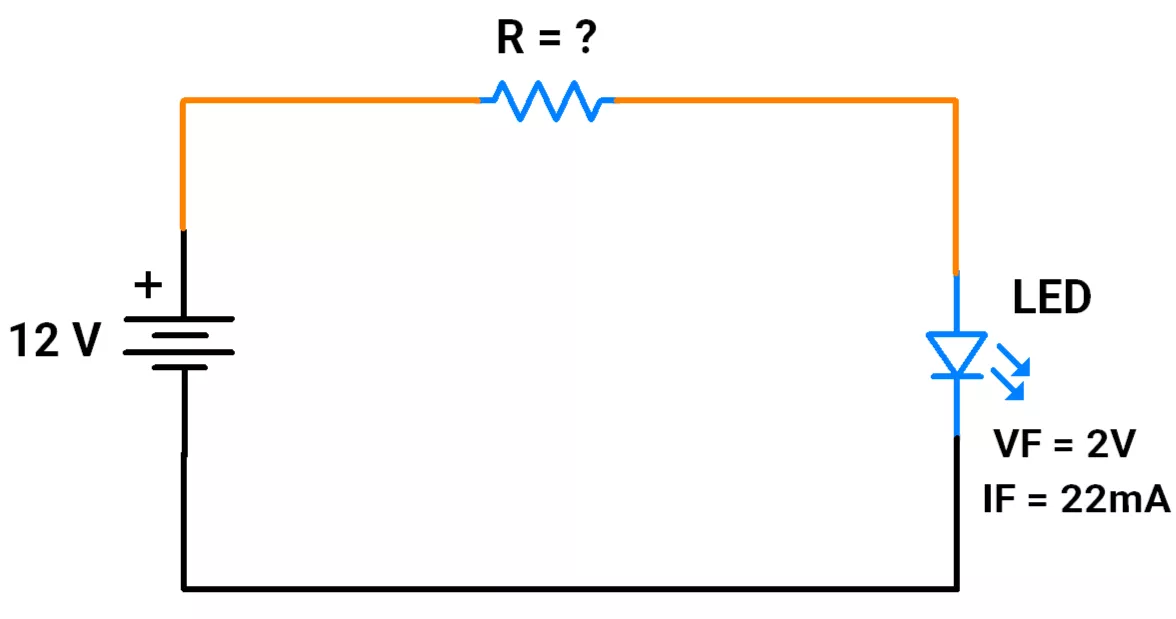
Neha is designing a 12V LED indicator using a red LED with 2V forward voltage.
The LED should run at about 22mA for proper brightness.
Help her select a surface-mount (SMD 1210 package) resistor that limits the current safely and provides reliable long-term operation.
Visit DigiKey's Resistors category and find a suitable part.
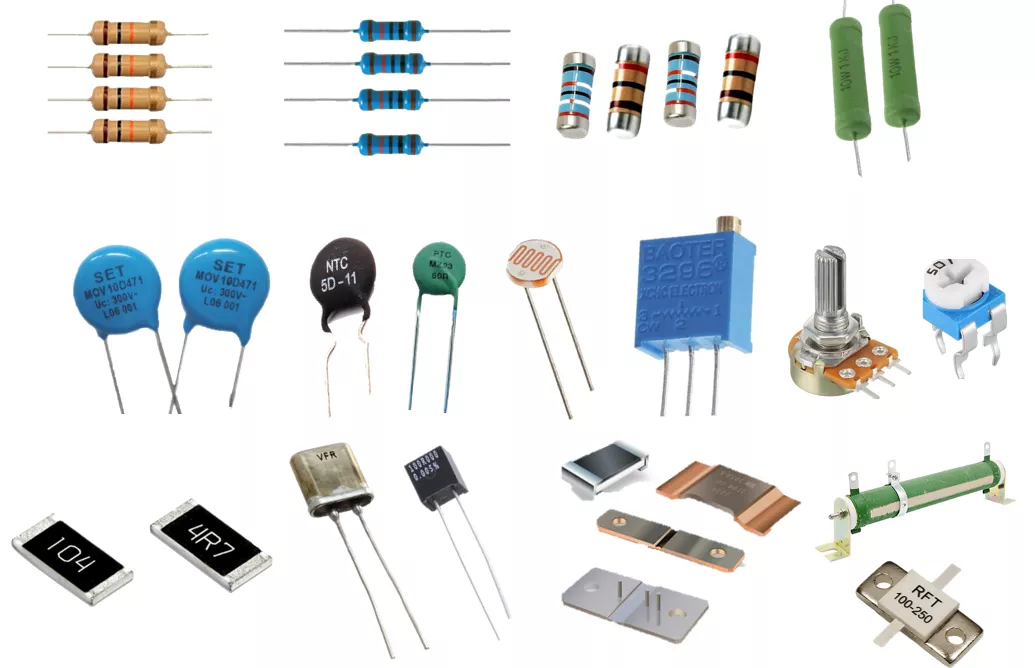
What is a Resistor?
A resistor is a passive two-terminal component that resists the flow of electric current. It is primarily used to control voltage and current in a circuit.
Resistors follow Ohm’s Law, which states:
V = I × R
Where:
- V = Voltage across the resistor
- I = Current through the resistor
- R = Resistance (in Ohms, Ω)
Practical Use Cases of Resistor
Resistors are not just basic elements; they are critical for ensuring correct operation and protection of components. Some of their practical applications include:
- Voltage Division – Using two or more resistors in series to derive a desired voltage level.
- Current Limiting – Often used in series with LEDs or input pins to protect components.
- Pull-up / Pull-down – Ensure a defined logic level for digital inputs.
- Biasing – Establish proper operating points for transistors and amplifiers.
- Filtering – Work with capacitors or inductors in analog and RF signal conditioning.
- Impedance Matching – In high-speed digital or RF designs, resistors ensure signal integrity.
- Power Dissipation – Used in snubber circuits and discharge paths.
Types of Resistors
1. Based on Construction
| Type | Images | Description |
|---|---|---|
| Carbon Film Resistor | 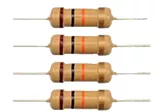 | Low cost, used in general-purpose or legacy circuits. Poor precision and stability. |
| Metal Film | 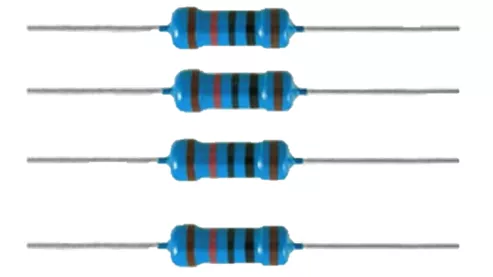 | High accuracy, low noise, and stable across temperature. Widely used in precision analog. |
| Thick Film | 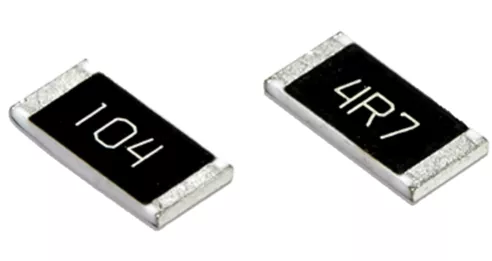 | Common in SMD form, low cost, used in most general-purpose surface-mount applications. |
| MELF (Metal Electrode Leadless Face) | 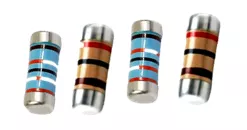 | Very high reliability and precision. Excellent stability over temperature and time.Low TCR. Higher surge and pulse load capability than chip resistors. Use Case: Preferred in high-reliability applications (automotive, aerospace, medical). |
| Wirewound | 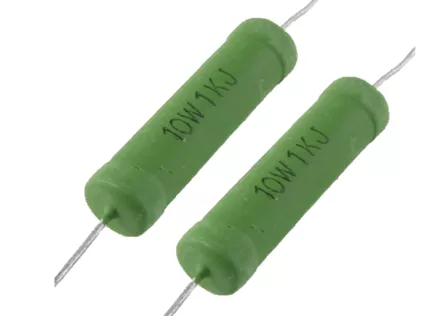 | High power handling and accuracy; suitable for power electronics and current sensing. |
| Carbon Composition |  | It has pulse handling capability, low price, low inductance and poor tolerance. Used as a surge protection resistor in medical devices |
2. Based on Function
| Type | Image | Description |
|---|---|---|
| Fixed Value Resistors | 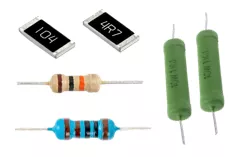 | Single, unchangeable resistance value. |
| Variable Resistors (Potentiometers / Trimmers) | 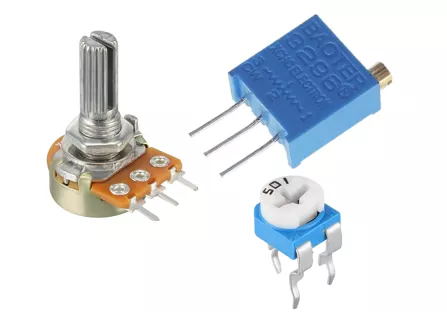 | The resistance value is adjustable manually. |
| Thermistors | 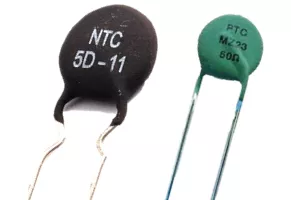 | Resistance changes with temperature |
| Photoresistors (LDRs) | 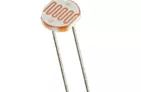 | Resistance changes with light intensity. |
| Current Sense Resistors (Shunt) | 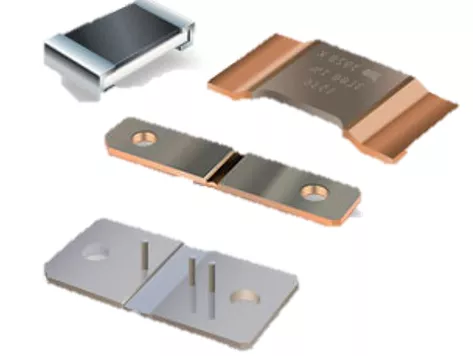 | Low resistance, high power rating, used for current measurement. |
| MOV (Metal Oxide Varistor) | 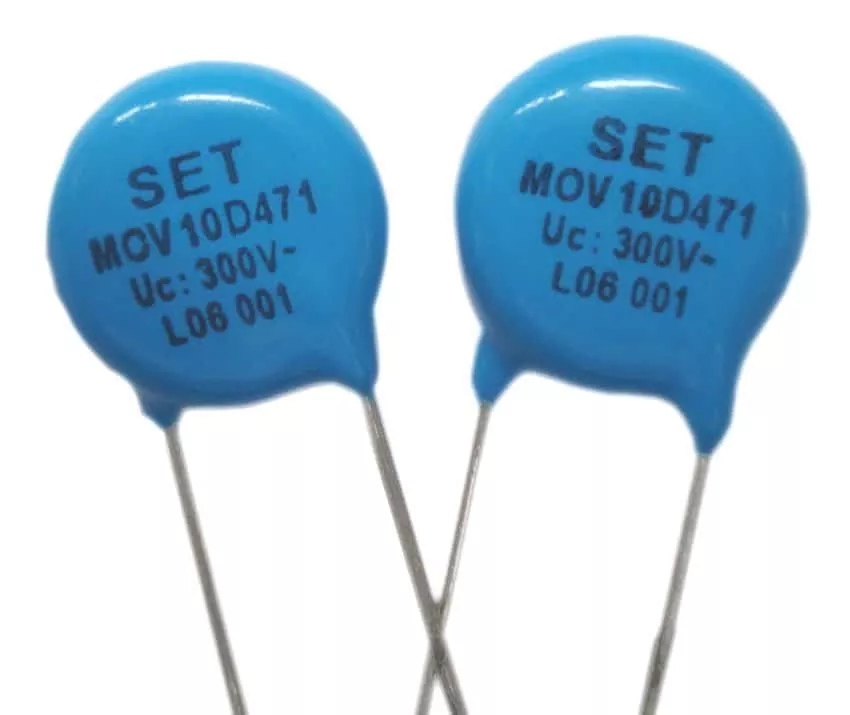 | Protect circuits from voltage surges. It absorbs surge energy and diverts it away from sensitive components. |
| Rheostat | 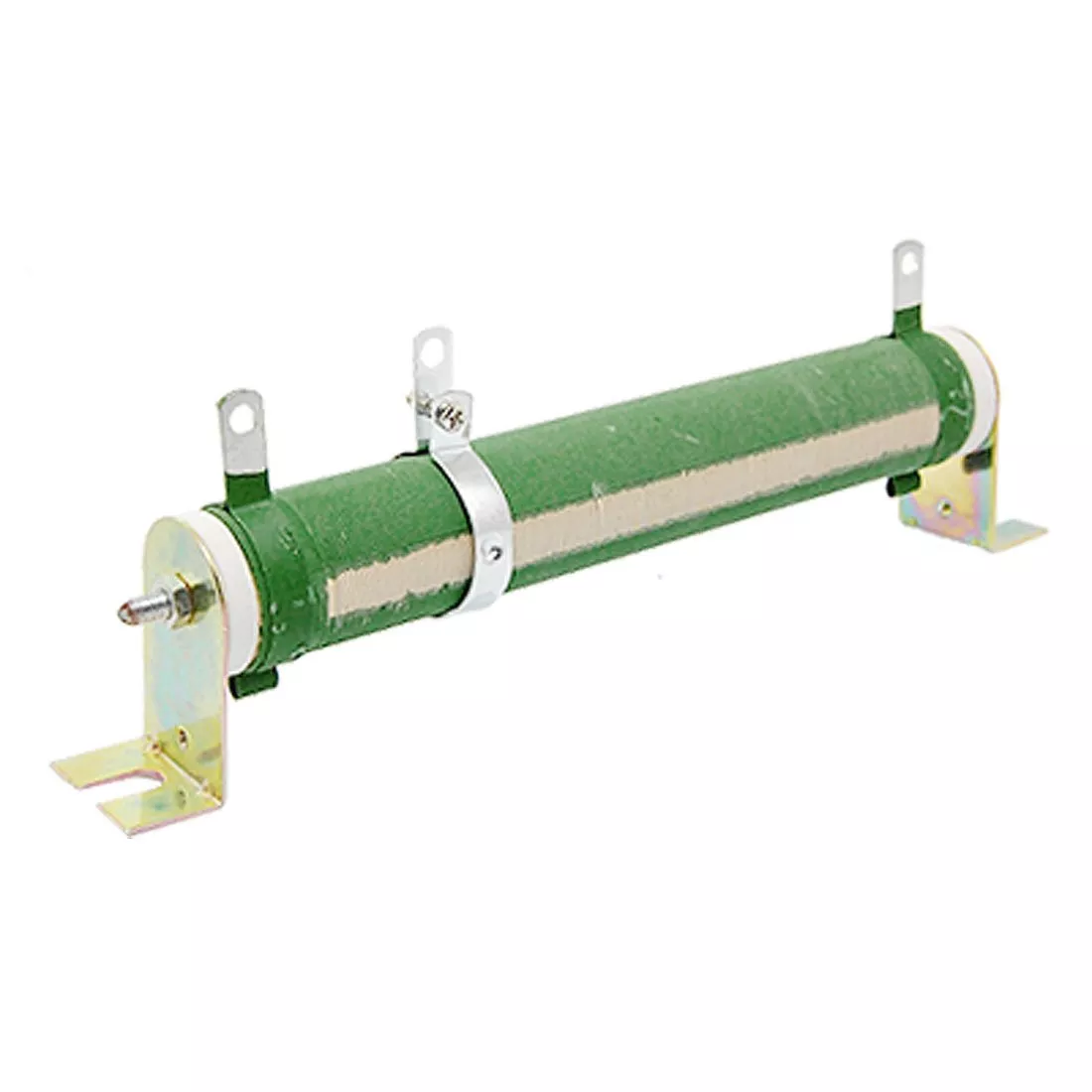 | It handles high currents, and they have high power ratings. Rheostat resistance changes by physically sliding. It is used in motor, fan control, etc. |
Resistor Key Specifications
Tolerance
Indicates variation from the nominal value.
It’s given as ±1%, ±5%, ±10%, etc.
E.g., A 100 Ω ±5% resistor means the actual value could vary between 95 Ω and 105 Ω.- Power Rating (Wattage)
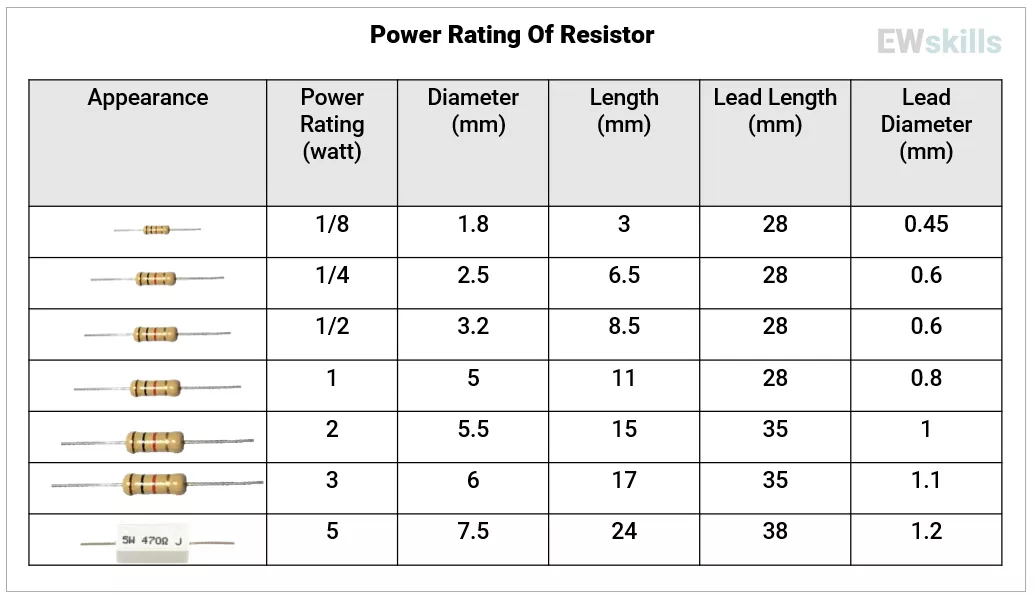
- Indicates how much power the resistor can safely dissipate as heat. Common ratings: 1/16W, 1/8W, 1/4W, 1/2W, 1W, 2W, 5W.
It depends on
- Physical size
- Material & construction (thick film, thin film, metal strip)
- Ambient temperature (derating applies at high temps)
Temperature Coefficient of Resistance (TCR)
Indicates resistance change per °C (ppm/°C). Low TCR (<50 ppm/°C) is preferred in precision circuits.
It is expressed in:
ppm/°C (parts per million per degree Celsius).
%/°C (percent per degree Celsius, where 1% = 10,000 ppm).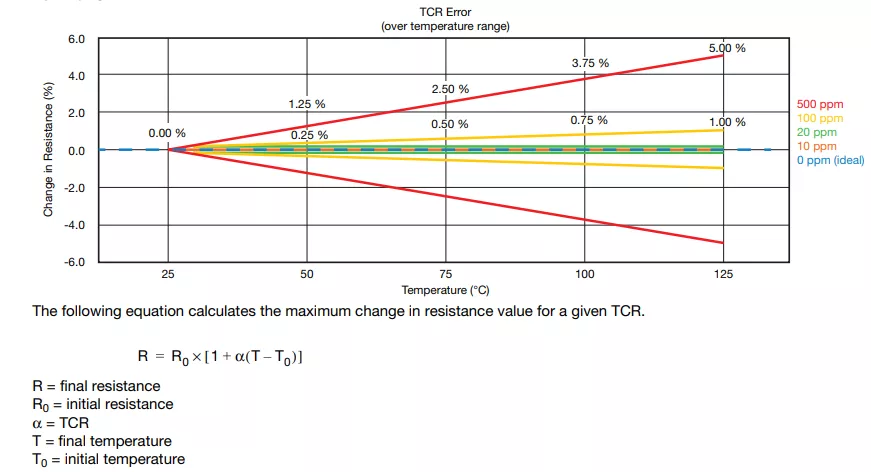
- Voltage Rating
- The voltage rating of a resistor is the maximum voltage that can be applied across its terminals without risking damage.
- Often overlooked in low-voltage circuits, but critical in high-voltage applications.
- Noise
- Resistors generate noise voltage caused by the random motion of electrons.
- Noise in the resistor depends on the current, temperature, resistor material and the construction of the resistor.
- Carbon film and composition resistors are noisy and unsuitable for sensitive circuits, while metal film resistors are ideal for low-noise precision applications like audio and medical devices.
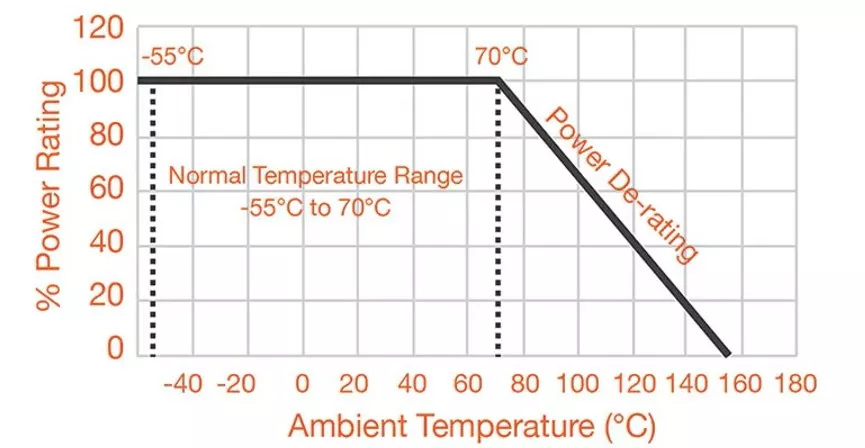
- Power Derating Curve
- The curve indicates that rated power dissipation decreases with rising ambient temperature.
It helps ensure reliability by indicating safe operating limits beyond the rated temperature.
Resistor Packages
Resistors come in various packages (physical forms). The right choice depends on power handling, size constraints, and assembly method (SMD vs. through-hole).
1. Through-Hole Resistor Packages
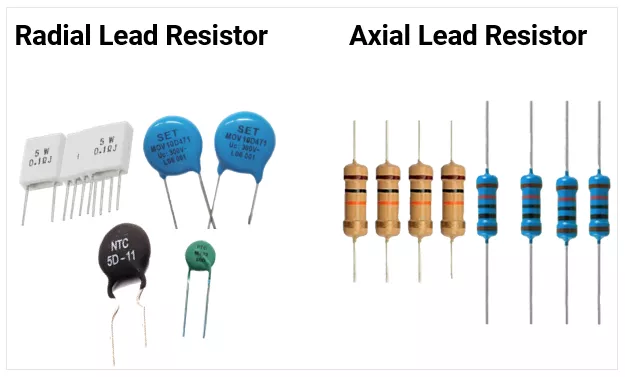
Used in prototyping high-power designs. These have leads that go through holes in a PCB and are soldered on the opposite side.
- Axial Lead Resistors
- Cylindrical body with leads on both ends.
- Common in older or high-power applications.
- Examples:
- 1/4W (0.25W) – Small general-purpose
- 1/2W, 1W, 2W, 5W – Higher power handling
- Radial Lead Resistors
- Both leads come out from one side (less common than axial).
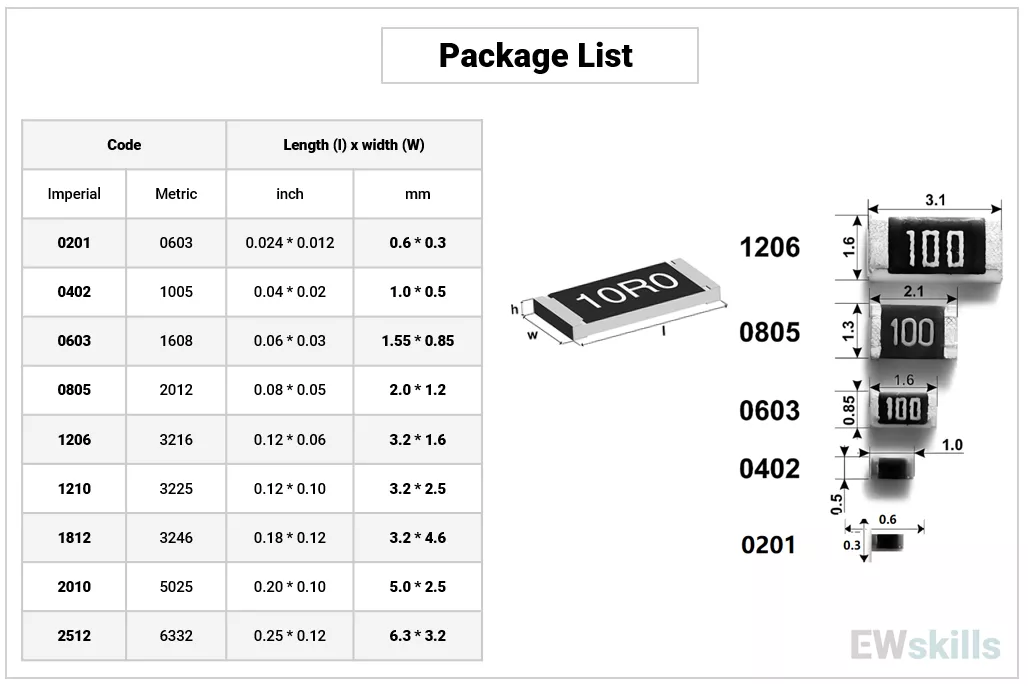
2. Surface-Mount (SMD) Resistor Packages
These are mounted directly onto the surface of PCBs and are widely used in modern electronics.
3. Special Packages
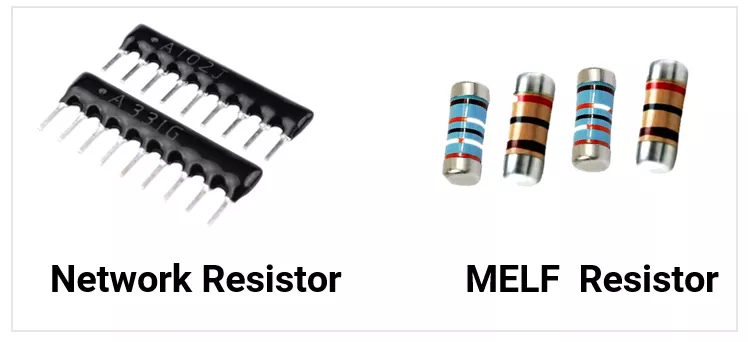
- Network Resistors (SIP/DIP) – Multiple resistors in a single package (e.g., 8-pin DIP).
- MELF (Metal Electrode Leadless Face) – Cylindrical SMD resistors (e.g., MMB0207).
Resistor Value Identification
Resistors are labeled with standardized codes to indicate their resistance value (Ohms), tolerance, and sometimes temperature coefficient. The three most common marking systems are
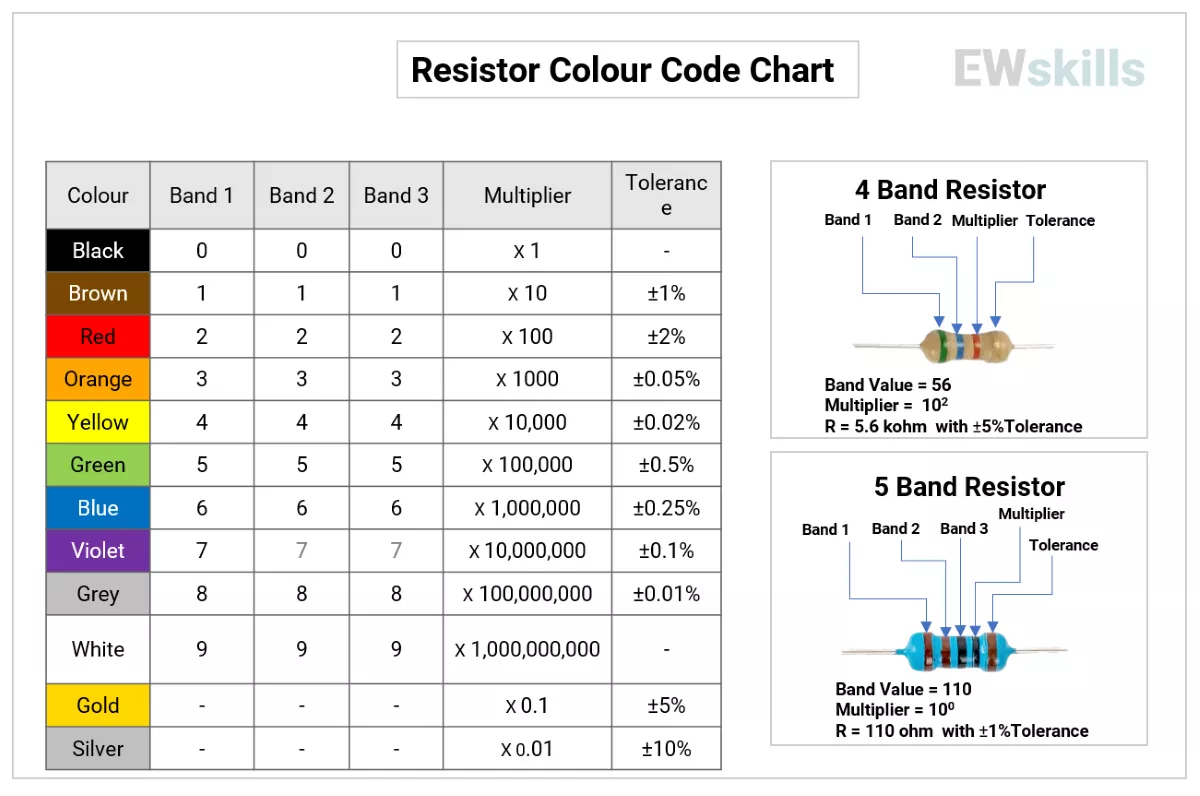
1.Colour Code(Axial Resistor)
Used for resistors with colored bands.
The chart below illustrates how to calculate resistor values using the color code.
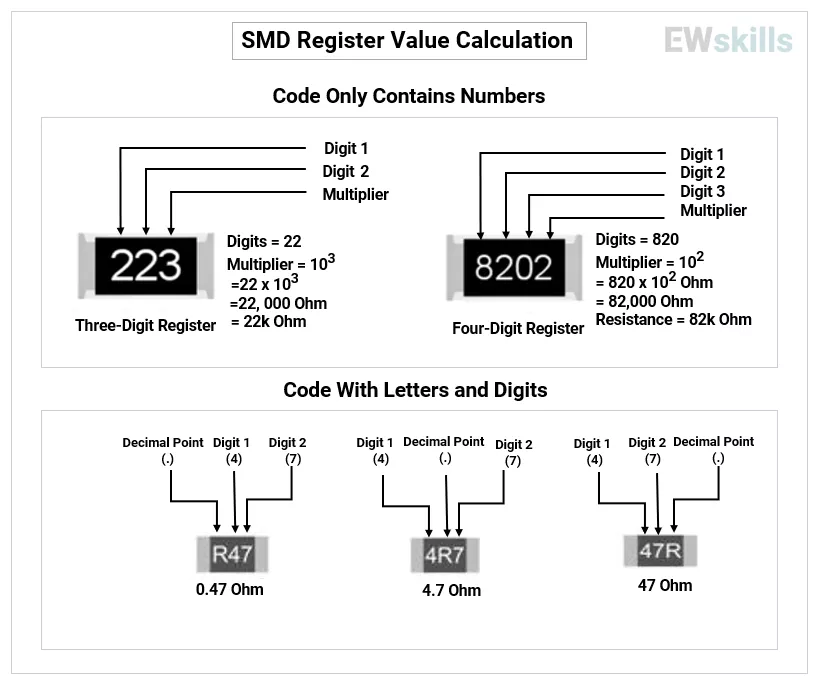
2. Numerical Code (SMD Resistors)
Surface-Mount Device (SMD) resistors are marked with a compact numerical or alphanumeric code to indicate their resistance value. The resistor value calculation is as shown below.
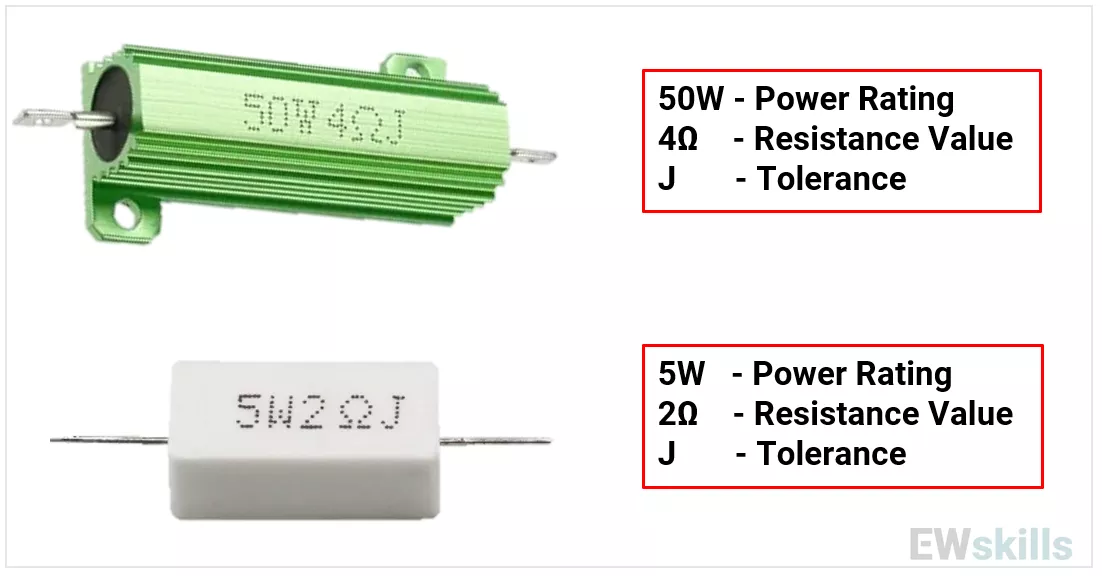
3. Direct Value Printing (High-Precision Resistors)
It is a method of marking resistor values directly on the component body for easy identification. It is commonly used for high-precision resistors.
Standard Resistance Value
- Instead of making every possible value of a resistor, manufacturers produce only preferred standard values.
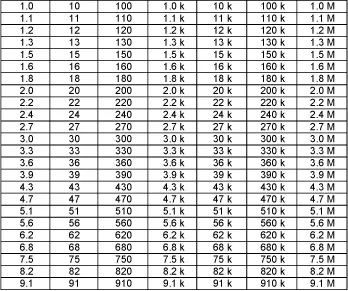
- Resistors are available in preferred standard values defined by the E-series (E6, E12, E24, E48, E96, E192), each of which comes with different tolerance levels.
- Given below is the standard value chart for the resistors with a tolerance of ±5%(E24 Series).
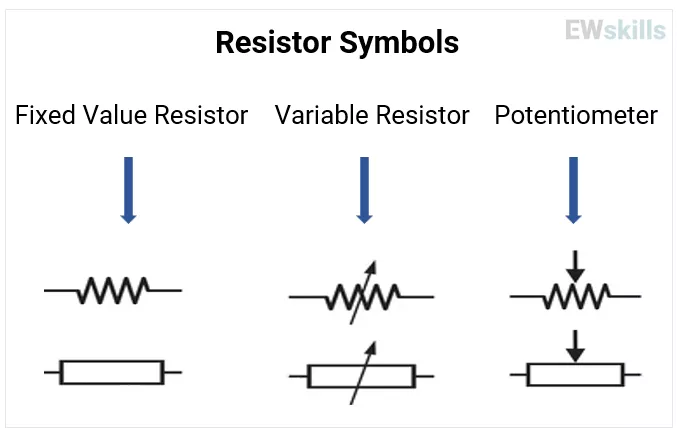
Symbols of Resistor
Below are the standard symbols used for resistors in electronic circuit diagrams.
How to select a Resistor?
Resistors are one of the most fundamental and widely used components in electronic circuit design. When selecting a resistor, the following key factors should be carefully considered:
1. Current Handling and Voltage Rating
- Current: Use a resistor rated for at least twice your circuit's current to avoid overheating. Example: A 100Ω, 1W resistor can handle up to 100mA but should stay below 50mA for safety.
- Voltage: Never exceed the resistor's max voltage (check datasheet). For reliability, stay below 50–70% of its limit. Example: A 10kΩ, 0.5W resistor’s maximum voltage is 70.7V but always use less voltage than that.
2. Power rating
- It is the maximum power a resistor can safely dissipate as heat without damage. Choose a resistor with at least 2× the actual power for safety and long life.
- Example: If you want a resistor to dissipate 0.1 W of power, choose a 0.25 W or higher rated resistor
3. Power Derating Curve
- Power derating is important in circuits where high temperatures and poor ventilation can lead to overheating.
- It is a standard concept in thermal design. The power derating curve shows how a resistor’s power handling decreases as temperature rises. So while selecting a resistor, it is necessary to check the power derating curve.
- Example: The Derating curve of a standard 0.25W CFR resistor is as shown in the given image.
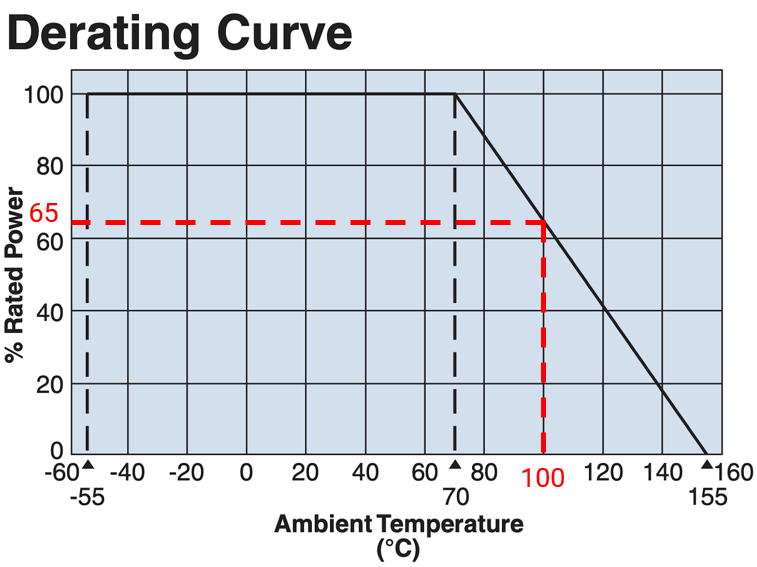
At 100°C, a 0.25 W resistor (derating from 70°C to 155°C) can safely handle only 0.1625 W (65%) power. If the circuit requires more than this, use a resistor with a higher power rating (like 0.5 W or 1 W).
4. TCR (Temperature Stability)
- Rule: Low-TCR (<50 ppm/°C) for precision, <200 ppm/°C for general use.
- Example: A 10kΩ, 100 ppm/°C resistor changes value by 50Ω over a temperature change of 50°C (ΔR = R × TCR × ΔT).
- Application: Critical for sensors, ADCs, voltage references—use metal film/thin-film resistors.
5. Noise Performance
- Carbon composition: High noise (avoid in sensitive analog circuits).
- Metal film: Low noise (good for audio/measurement).
6. Tolerance (±%)
- Use ±1% or less for a precision circuit.
- Use ±5% for a general purpose.
7. Package Selection
- Pick Through-Hole If:
- You need >5W power handling.
- Working with high voltage/current (e.g., industrial gear).
- Prototyping or repairability is a priority.
- Pick SMD If:
- Designing small PCBs (e.g., smartphones, IoT devices).
- Automated assembly is required.
- Power is <2W (or up to 5W with thermal vias).
It is very important to select a proper resistor as per the application.
Real-World Design Examples
- Current limiting in LED Circuits
- A resistor is placed in series with an LED to prevent excessive current.
- Example: For a 5V supply, 2V forward voltage of LED, and 10 mA current, use a 300Ω carbon film resistor (¼ or ½ watt) in series.
- Pull-up / Pull-down Resistor
- Low Resistance (1k–4.7kΩ): Faster switching, but higher power.
- High Resistance (> 10kΩ): Saves power but risks signal integrity over longer wire length.
- RF Termination Resistor (usually 50Ω or 75Ω)
It’s a specialized resistor designed to work at radio frequencies (RF)—typically from a few MHz to many GHz.
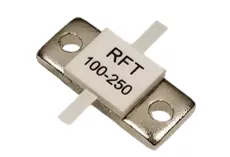
- Choose a non-inductive resistor (thin-film, not wirewound), and it must not exceed the resistor’s dissipation limit.
- Speaker Crossovers Resistor
- Here we generally choose Wirewound or non-inductive resistors, which handle high power(5W-50W).
- Snubber Networks
- Choose Carbon composition (through-hole), which can handle high-voltage spikes.
- Example: 100Ω + 100nF across relay contacts.