33. Signal Switching Diode Selection
1. Component Purpose
In digital logic circuits, diodes are often used to isolate signals — allowing one signal to drive a line without being affected by another. This prevents unwanted current backflow between two digital outputs.
A small-signal switching diode is used here because the signal current is very low (milliamps), and the diode must switch fast enough (≤10ns reverse recovery) to not distort or delay the logic signal transitions.
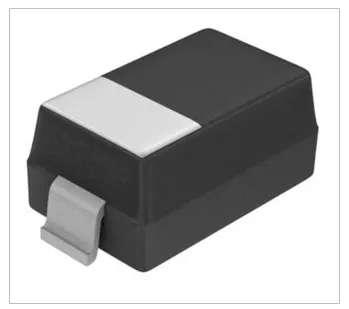
Required: Small Signal Switching · ≥150mA · ≥75V · trr ≤10ns · SOD-123 · SMD · −40°C to +125°C · RoHS
2. How to Find It on DigiKey
Go to DigiKey.com → Discrete Semiconductor Products → Diodes → Rectifiers → Single Didoe
Apply these filters:
- Diode Type (Speed) → Small Signal =< 200mA (Io), Any Speed
- Voltage - DC Reverse (Vr) → 75V or higher
- Current - Average Rectified (Io) → 150mA or higher
- Supplier Device Package → SOD-123
- Part Status → Active
Tip: On DigiKey, reverse recovery time (trr) may not always be a direct filter. Check the datasheet of each part to confirm trr ≤10ns.
3. Key Specifications & What They Mean
| Specification | Required | Why |
|---|---|---|
| Diode Type | Small Signal Switching | Designed for low-current, fast switching. |
| Avg Current (Io) | ≥150mA | Sufficient for digital signal current levels. |
| Reverse Voltage (Vr) | ≥75V | Margin for signal overshoots and transients. |
| Recovery Time (trr) | ≤10ns | Fast enough to not distort logic transitions. |
| Package | SOD-123 | Tiny SMD; fits near logic ICs. |
| Temp Range | −40°C to +125°C | Industrial operating conditions. |
| RoHS | Yes | Compliance required. |
4. Selecting a Safe, Production-Ready Part
The filtered list will show many matching parts. Before you pick one, check: Is it Active? Is stock available? Is the manufacturer reputable? Is a datasheet available?
Full checklist: How to Select a Safe, Production-Ready Component — EWskills Guide
5. Filtered DigiKey Link
➡ View Matching Parts — Small Signal Switching, SOD-123, ≥75V, ≥150mA