
67. Triac Output Optocoupler for AC Load Control
1. Component Purpose
To switch a 230VAC heater, the controller uses a main power triac. But the controller is 5V logic — it cannot drive the triac gate directly at mains potential.
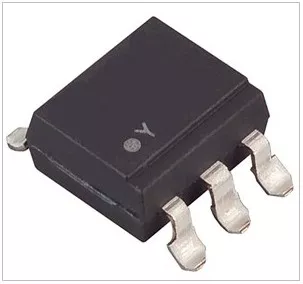
A triac-output optocoupler bridges this gap. The 5V controller drives the internal LED; the optocoupler’s built-in triac output triggers the main power triac’s gate, all with complete galvanic isolation from the mains.
Zero-crossing detection is critical for heater control. It ensures the triac only fires when the AC waveform crosses zero, which dramatically reduces EMI and inrush current on resistive loads.
Required: Triac Output · Zero-Cross · 1-Ch · ≥4170Vrms · Voff ≥400V · dV/dt ≥600V/µs · 6-SMD
2. How to Find It on DigiKey
Go to DigiKey.com → Isolators → Optoisolators → Triac, SCR Output
Apply these filters:
- Output Type → Triac
- Zero Crossing Circuit → Yes
- Number of Channels → 1
- Voltage - Isolation → 4170Vrms or higher
- Voltage - Off State → 400V or higher
- Package / Case → 6-SMD
- Part Status → Active
Tip: Check the LED trigger current (Ift) in the datasheet. It must be ≤15mA so your 5V GPIO can reliably trigger it through a series resistor.
3. Key Specifications & What They Mean
| Specification | Required | Why |
|---|---|---|
| Output Type | Triac | Directly triggers power triac gate. |
| Zero Crossing | Yes | Reduces EMI; fires only at AC zero. |
| Isolation | ≥4170Vrms | Mains-rated isolation for safety. |
| Off-State Voltage | ≥400V | Blocks 230VAC peak (~325V) + margin. |
| dV/dt | ≥600V/µs | Resists false triggering from mains transients. |
| LED Trigger (Ift) | ≤15mA | Drivable from 5V controller GPIO. |
| Package | 6-SMD | Compact for PCB design. |
| Temp Range | −40°C to +85°C | Industrial conditions. |
| RoHS | Yes | Compliance required. |
4. Selecting a Safe, Production-Ready Part
The filtered list will show matching parts. Before you pick one, check: Is it Active? Is stock available? Is the manufacturer reputable? Is a datasheet available?
Full checklist: How to Select a Safe, Production-Ready Component — EWskills Guide
5. Filtered DigiKey Link
➡ View Matching Parts — Triac, Zero-Cross, ≥4170Vrms, ≥400V Off-State, 6-SMD