30. Buck Converter Schottky Diode
1. Component Purpose
In a non-synchronous buck converter, the high-side switch (MOSFET) chops the 12V input into pulses. When this switch turns OFF, the inductor current must continue flowing — and the catch diode (also called freewheeling diode) provides this current path.
A Schottky diode is used because it has very low forward voltage drop (≤0.55V vs ~1V for standard diodes). Since this diode conducts for a large portion of each switching cycle, even a small Vf difference significantly affects converter efficiency and heat generation.
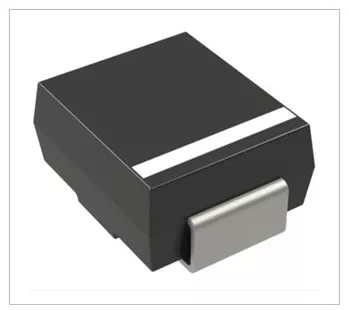
Required: Schottky · ≥3A · ≥30V · Vf ≤0.55V · SMB · SMD · −40°C to +125°C · RoHS
2. How to Find It on DigiKey
Go to DigiKey.com → Discrete Semiconductor Products → Diodes - Rectifiers - Single
Apply these filters:
- Diode Type (Technology) → Schottky
- Voltage - DC Reverse (Vr) → 30V or higher
- Current - Average Rectified (Io) → 3A
- Supplier Device Package → SMB (DO-214AA)
- Mounting Type → Surface Mount
- Part Status → Active
Tip: SMB package is also called DO-214AA on DigiKey. It is one size larger than SMA and handles higher current and power dissipation.
3. Key Specifications & What They Mean
| Specification | Required | Why |
|---|---|---|
| Diode Type | Schottky | Low Vf critical for converter efficiency. |
| Avg Current (Io) | ≥3A | Load is 2A; 1.5× margin for switching stress. |
| Reverse Voltage (Vr) | ≥30V | Input is 12V; margin for ringing/spikes. |
| Forward Voltage (Vf) | ≤0.55V | Lower Vf = less heat, better efficiency. |
| Package | SMB | Handles higher power than SMA. |
| Temp Range | −40°C to +125°C | Industrial operating conditions. |
| RoHS | Yes | Compliance required. |
4. Selecting a Safe, Production-Ready Part
The filtered list will show many matching parts. Before you pick one, check: Is it Active? Is stock available? Is the manufacturer reputable? Is a datasheet available?
Full checklist: How to Select a Safe, Production-Ready Component — EWskills Guide
5. Filtered DigiKey Link
➡ View Matching Parts — Schottky, SMB, ≥3A, ≥30V