
6. Glass Cartridge Fuse Replacement
Mary is a maintenance technician in a factory.
A digital multimeter on the production floor stopped measuring current.
After opening the meter, she found that the current measurement fuse had blown.
The instrument manual specifies the following replacement fuse:
Type: Glass cartridge fuse
Current Rating: 500mA
Voltage Rating: 250VAC
Response Time: Fast Blow
Size: 5mm × 20mm
The company's approved vendor list (AVL) specifies Littelfuse for circuit protection components, so the replacement fuse must be selected from Littelfuse on DigiKey.
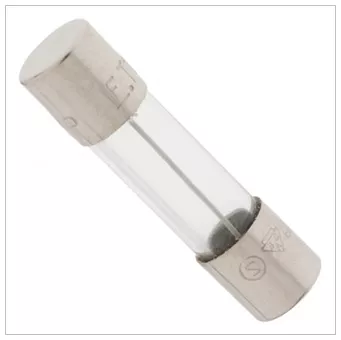
Help her find the correct glass cartridge replacement fuse from Littelfuse on DigiKey.
Make sure it matches the exact specifications from the instrument manual.
Visit DigiKey's Fuses category and find a suitable part.
What is a fuse?
A fuse is a one‑time (or resettable) over‑current protection device. When the current exceeds a safe limit for long enough, the fuse element heats and melts, opening the circuit.
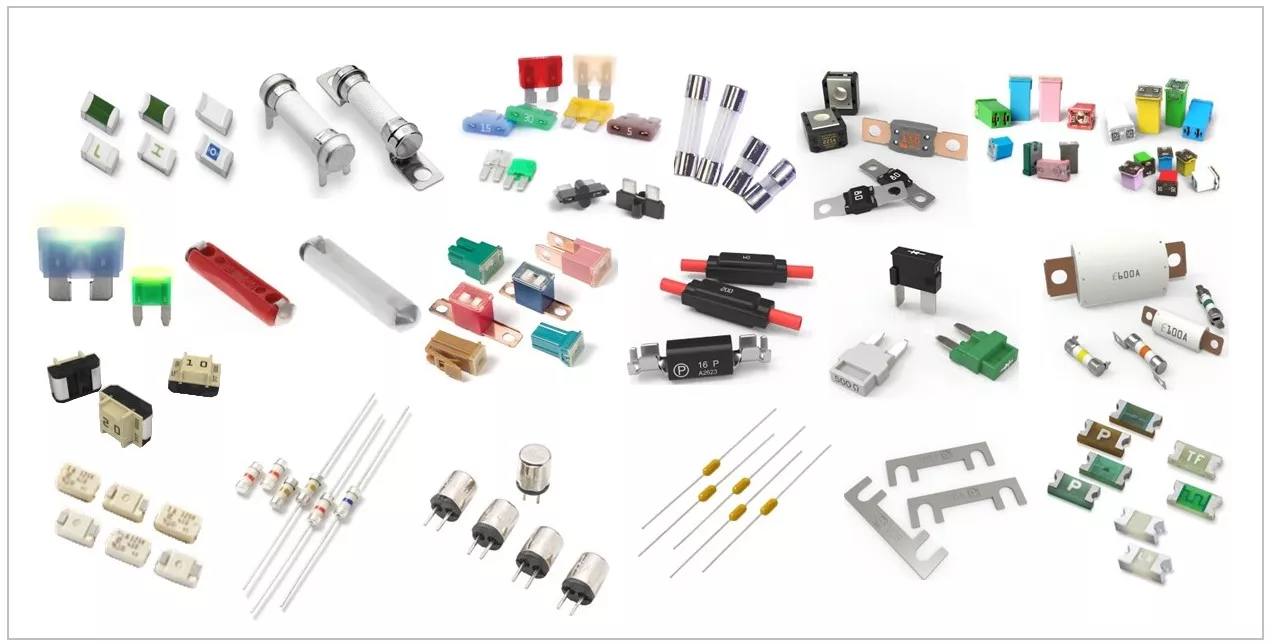
Schematic Symbols of Fuse:
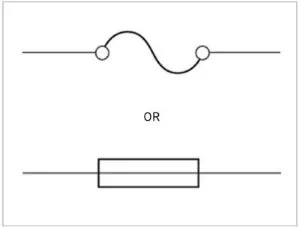
Simple FUSE series connection diagram:
Why do you always need a fuse
- Protects the circuit from overcurrent & short-circuits.
- Prevents thermal runaway, fire hazards, and PCB trace burnouts.
- Prevent wiring/PCB overheating and fire
- Protect ICs, batteries, and power stages
- Required by UL/IEC/CE in many products
Good vs blown fuse:
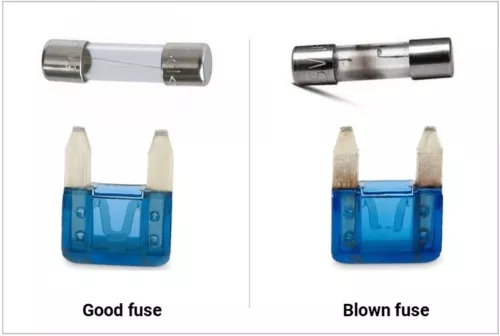
Where fuses are used (Practical use cases)
- AC/DC power entry (adapters, chargers, SMPS)
- Battery‑powered systems (packs, BMS, handhelds)
- Automotive 12/24 V harness protection
- Motors/solenoids (inrush, stall faults)
- I/O & ports (USB, auxiliary outputs with resettable PTC)
Types of Fuses
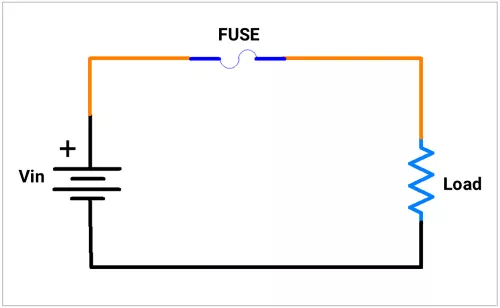
1. Based on Package / Form Factor
| Types | Image | Description |
|---|---|---|
| Glass Cartridge Fuse | 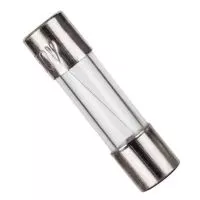 | Visible element. Low cost. General use. Quick replacement. |
| Ceramic Cartridge Fuse | 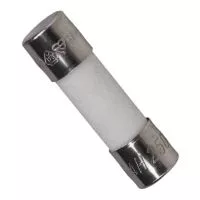 | Higher breaking capacity, mains/industrial use. Quick replacement. |
| SMD Fuse | 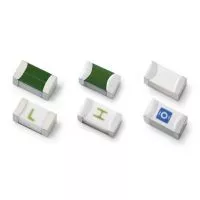 | Used on compact circuit boards. And also used for secondary protection. Permanently soldered. Preventing quick replacement. |
| Axial Lead | 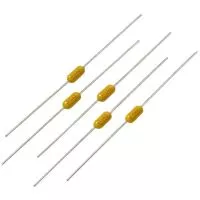 | Through-hole. Used on small PCBs. Permanently soldered. Preventing quick replacement. |
| Automotive Blade Fuse | 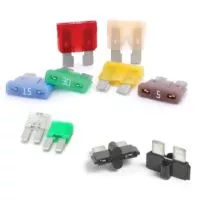 | Color-coded. Used in vehicle fuse box. Quick replacement.
|
| Bolt-Down Fuses – Automotive | 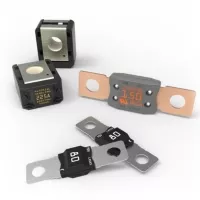 | Safeguards high currents. Stops electrical arcing. Withstands harsh vibrations. Dissipates excess heat. |
| Indicator Fuses |  | Glows when circuit breaks. Accelerates fault finding time. Simplifies overall system maintenance. Protects standard electrical circuits. |
| Torpedo Fuse | 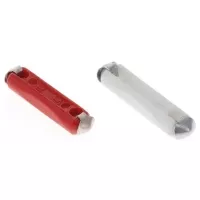 | Protects older vehicle circuits. Features exposed metal elements. Uses pointed contact ends. Often called ceramic fuses. |
| PICO Fuse | 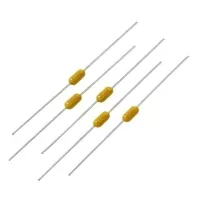 | Protects printed circuit boards. Features compact, subminiature design. Looks like a resistor. Delivers fast-acting fault protection. |
| Strip Fuses | 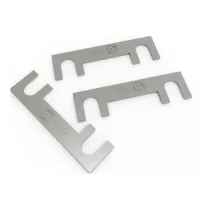 | Simple flat metal strips. Bolts right on batteries. Easy to see breaks. |
2. Based on Speed of Operation
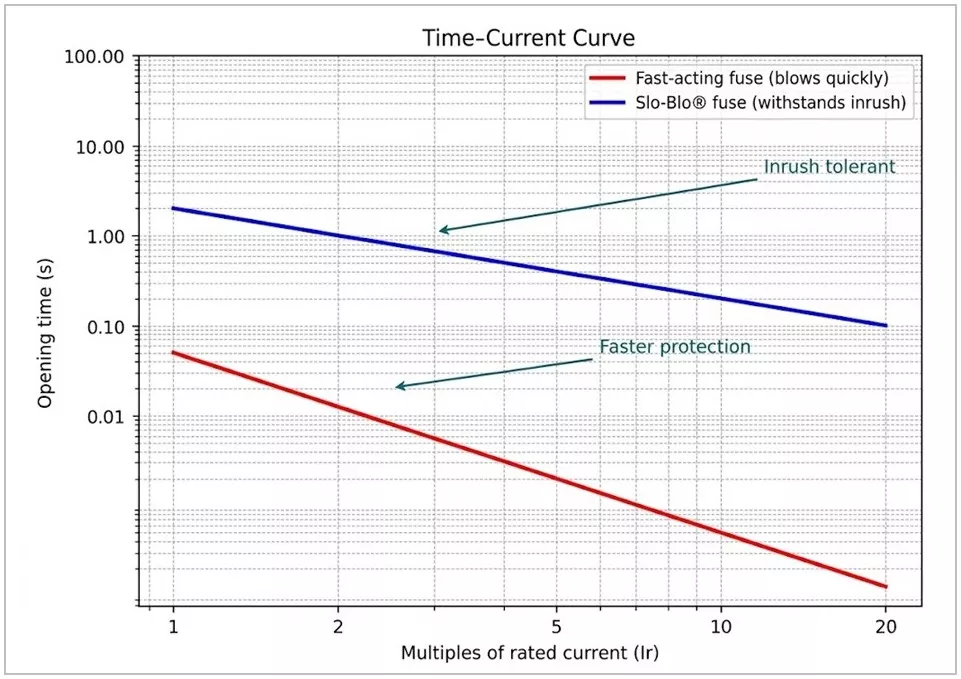
- Fast-blow (F) – reacts instantly, protects sensitive semiconductors
- Slow-blow (T / Slo-Blo®) – tolerates inrush currents from motors/transformers
Typical time–current curve (Slo‑Blo® vs fast acting fuse):
3. Specialty Fuses
| Types | Image | Description |
|---|---|---|
High-voltage Fuses Overcurrent Protection, One-shot | 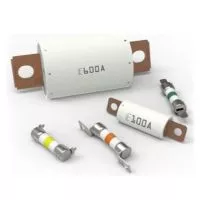 | Used for industrial, EV, medical, power conversion. |
Thermal Fuses (TCO) Overtemperature Protection, One-shot
| 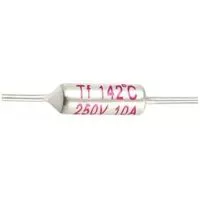 | Open on excess temperature (motors, transformers). |
Resettable Polyfuses (PTC) Overcurrent Protection, Resettable
| 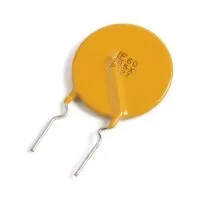 | Portable devices, USB, battery packs. |
| Special Fuse- Shunt (measure current) | 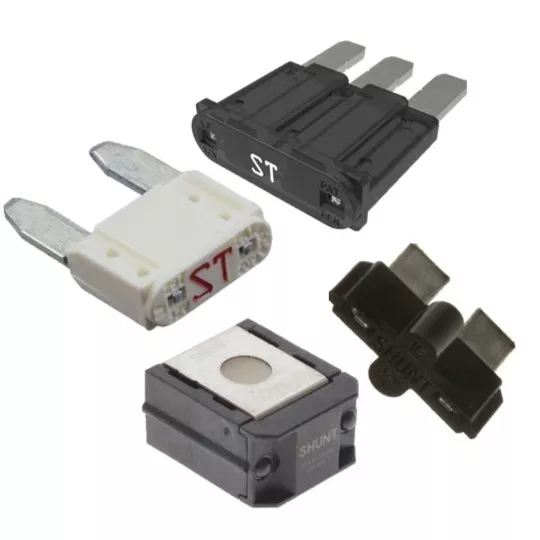 | Tracks the current flow. Just a precise resistor. It never actually blows.
|
4. Based on Reset Capability
| Types | Image | Description |
|---|---|---|
| One-time use Fuses | 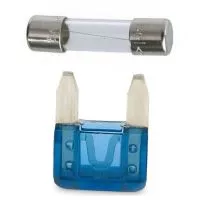 | Must be replaced once blown. |
| Resettable Fuses | 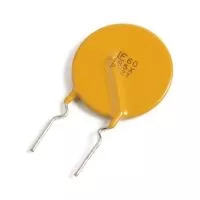 | Self-reset after fault clears. |
Key specifications
- Rated current (Ir): Maximum continuous current at 25 °C without opening.
- Rated voltage (Vr): Maximum system voltage at which the fuse can safely interrupt a fault.
- Breaking/interrupting capacity (Iᵦ): The maximum fault current that a fuse can safely interrupt at its rated voltage.
- Time–current characteristic: “How fast it blows” at multiples of Ir (Fast vs Slo‑Blo®/Time‑Lag).
- I²t (melting let‑through energy): I²t is the fuse’s “energy rating”- it tells how much fault current (amperes squared × time) the fuse can safely handle before it blows. Higher I²t means the fuse can withstand larger short bursts of current without opening; lower I²t means faster, more sensitive protection.
- Resistance / voltage drop / power dissipation: The fuse itself has some resistance, so when current flows, it causes a small voltage drop and heat loss. It is important to check in low-voltage circuits where even a small drop can affect performance.
- Temperature derating: Fuse opens sooner at high ambient; use manufacturer’s derating curves.
Example Littelfuse 217 Series Glass Cartridge Fuse Specifications:
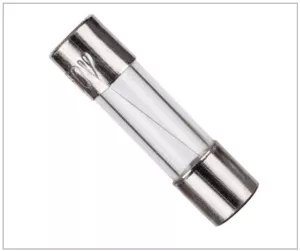
| Type | Description |
|---|---|
| Fuse Type | Cartridge, Glass |
| Current Rating | 0.5A (500mA) |
| Voltage Rating | 250VAC |
| Breaking/interrupting capacity (Iᵦ) | 35A |
| Response Time | Fast Blow |
| Operating Temperature | -55°C to 125°C |
| Melting I²t | 0.215 |
| Size | 5mm × 20mm |
| Manufacturer | Littelfuse |
| RoHS3 | Yes |
Example Fuse Time-Current Characteristic (TCC) Curve:

How to select a fuse (field‑proven workflow)
Step 1 — Define the job
- Nominal load current (I_load, RMS/avg) and ambient temp range.
- Supply voltage (AC/DC) and fault current available (source + path).
- Expected inrush/starting profile (motors, caps, heaters).
- Safety/agency needs (UL/IEC/automotive ISO).
Step 2 — Pick the construction
- Mains / high interrupt: Ceramic time‑lag.
- General low‑energy: Glass or SMD thin‑film.
- Automotive harness: Blade (ATOF/MINI/MICRO2), MEGA for battery.
- Resettable needs: PTC 1812L (ports) or MHP (battery).
Step 3 — Size the current rating
- Start at 1.25× to 1.5× I_load (at 25 °C).
- Check temperature derating curve → reduce Ir if needed (hot environments).
Step 4 — Pass the inrush
- Use the time–current curve: ensure the fuse does not open at the inrush multiple for the duration. E.g., Inductive loads like Motors, solenoid valve (Select Slo‑Blo® for transformer/motor/capacitor inrush.)
Step 5 — Fault safety check
- Ensure Vr ≥ system voltage and Iᵦ ≥ available fault current (especially on AC mains → prefer ceramic high‑Iᵦ series like 215/514).
Step 6 — Verify I²t
- Compare fuse I²t (melting) with inrush pulse I²t (or downstream semiconductor limits). Favor a lower I²t if you must protect devices with a tight SOA.
Step 7 — Package & logistics
- PCB space (SMD vs THT), serviceability (cartridge in holder), cost, and availability.
Worked examples
Example A — 85–265 VAC 60 W SMPS
- AC mains, high surge + inrush → ceramic time‑lag
- Pick 5×20 mm 215 for input; NTC + MOV in front; check interrupt rating and surge withstand.
Example B — Automotive battery feed (100 A)
- Under‑hood battery distribution → MEGA® 32 V 100 A bolt‑down; confirm 2 kA interrupt @32 V and ambient derating.
Common mistakes & field failures (and how to avoid)
- Choosing Vr too low → arc doesn’t extinguish on DC → fire risk. (Always check Vr.)
- Glass fuse where interrupt rating is insufficient→ use ceramic (215/514) on high‑energy mains.
- Ignoring ambient temp → nuisance blows in summer (use derating).
- Not accounting for inrush → fast‑acting fuse nuisance trips on power‑up (use Slo‑Blo® like 315/218/468).
- Using PTC where one‑time protection is required by safety→ select the proper cartridge fuse.
Mounting/torque errors on bolt‑down fuses → localized heating; follow torque specs (MEGA).
Quick selection tables (by situation)
| Situation | Image | Recommended type |
|---|---|---|
AC Mains Adapter (25–200 W) | 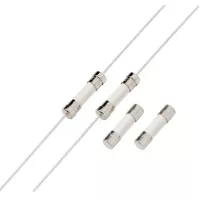 | Littelfuse 5mm x 20mm Ceramic Cartridge |
Automotive Harness Branch (Secondary Circuits) | 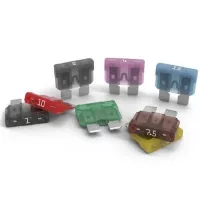 | ATOF / MINI / MICRO2 Blade Fuses |
Battery or Alternator Feed (Primary Power) | 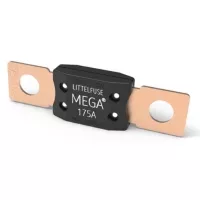 | MEGA Series Boltdown Fuse |