
Fuse Quick Reference Guide
What is a fuse?
A fuse is a one‑time (or resettable) over‑current protection device. When the current exceeds a safe limit for long enough, the fuse element heats and melts, opening the circuit.
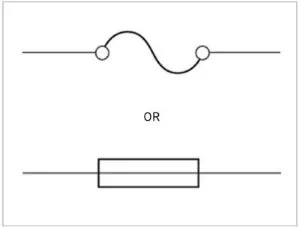
Schematic Symbols of Fuse:
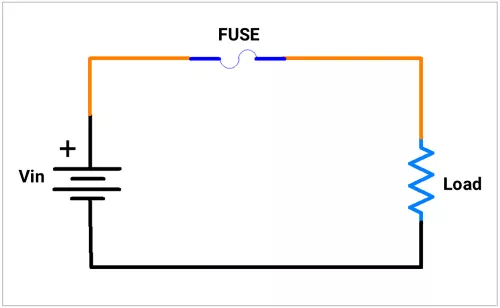
Simple FUSE series connection diagram:
Why do you always need a fuse
- Protects the circuit from overcurrent & short-circuits.
- Prevents thermal runaway, fire hazards, and PCB trace burnouts.
- Prevent wiring/PCB overheating and fire
- Protect ICs, batteries, and power stages
- Required by UL/IEC/CE in many products
Good vs blown fuse:
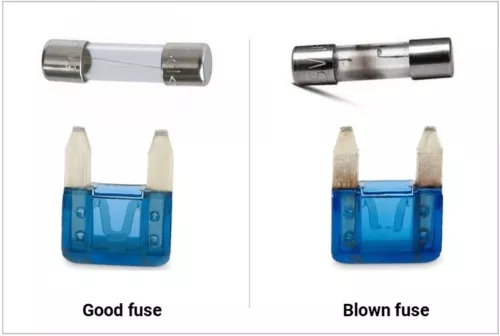
Where fuses are used (Practical use cases)
- AC/DC power entry (adapters, chargers, SMPS)
- Battery‑powered systems (packs, BMS, handhelds)
- Automotive 12/24 V harness protection
- Motors/solenoids (inrush, stall faults)
- I/O & ports (USB, auxiliary outputs with resettable PTC)
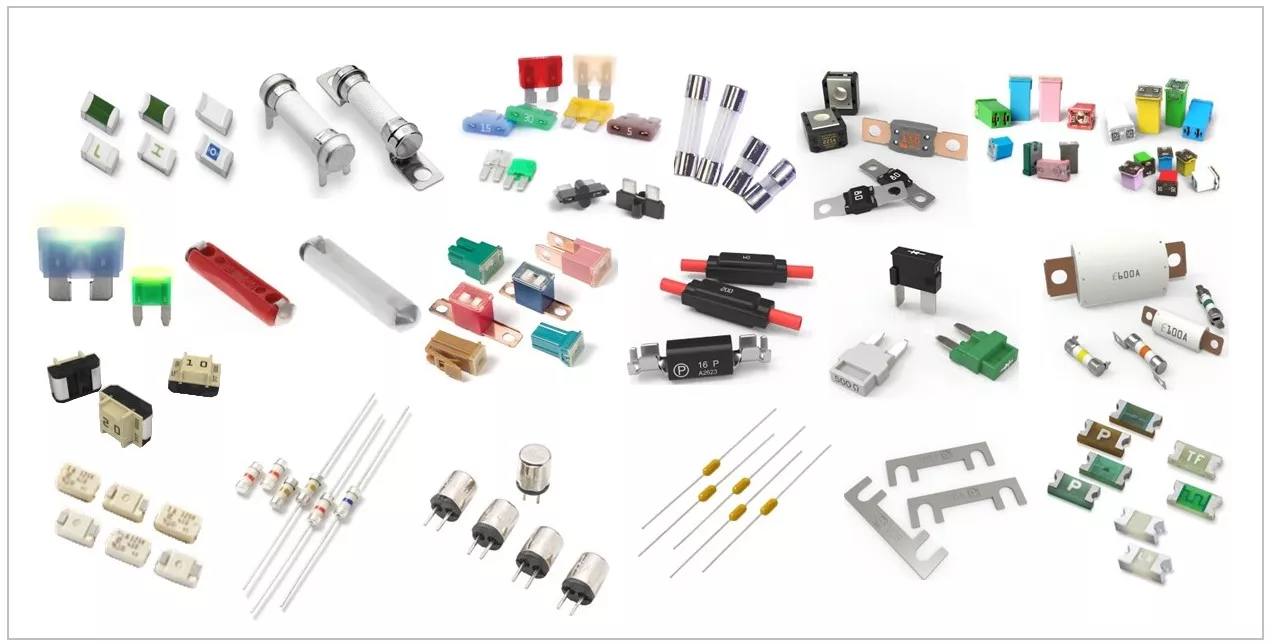
Types of Fuses
1. Based on Package / Form Factor
| Types | Image | Description |
|---|---|---|
| Glass Cartridge Fuse | 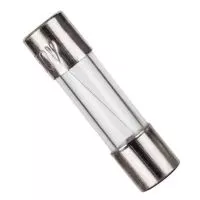 | Visible element. Low cost. General use. Quick replacement. |
| Ceramic Cartridge Fuse | 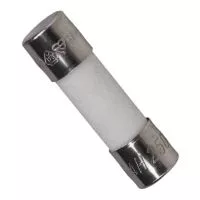 | Higher breaking capacity, mains/industrial use. Quick replacement. |
| SMD Fuse | 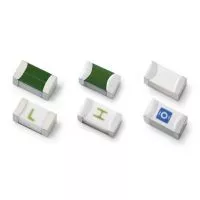 | Used on compact circuit boards. And also used for secondary protection. Permanently soldered. Preventing quick replacement. |
| Axial Lead | 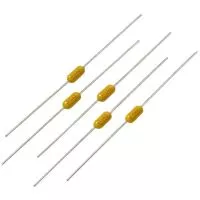 | Through-hole. Used on small PCBs. Permanently soldered. Preventing quick replacement. |
| Automotive Blade Fuse | 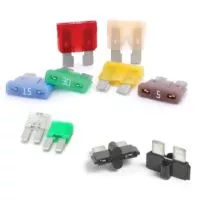 | Color-coded. Used in vehicle fuse box. Quick replacement.
|
| Bolt-Down Fuses – Automotive | 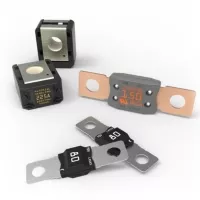 | Safeguards high currents. Stops electrical arcing. Withstands harsh vibrations. Dissipates excess heat. |
| Indicator Fuses |  | Glows when circuit breaks. Accelerates fault finding time. Simplifies overall system maintenance. Protects standard electrical circuits. |
| Torpedo Fuse | 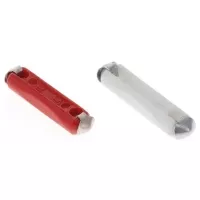 | Protects older vehicle circuits. Features exposed metal elements. Uses pointed contact ends. Often called ceramic fuses. |
| PICO Fuse | 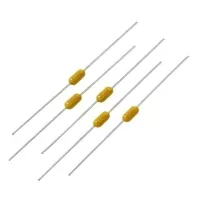 | Protects printed circuit boards. Features compact, subminiature design. Looks like a resistor. Delivers fast-acting fault protection. |
| Strip Fuses | 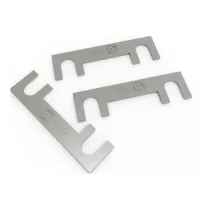 | Simple flat metal strips. Bolts right on batteries. Easy to see breaks. |
2. Based on Speed of Operation
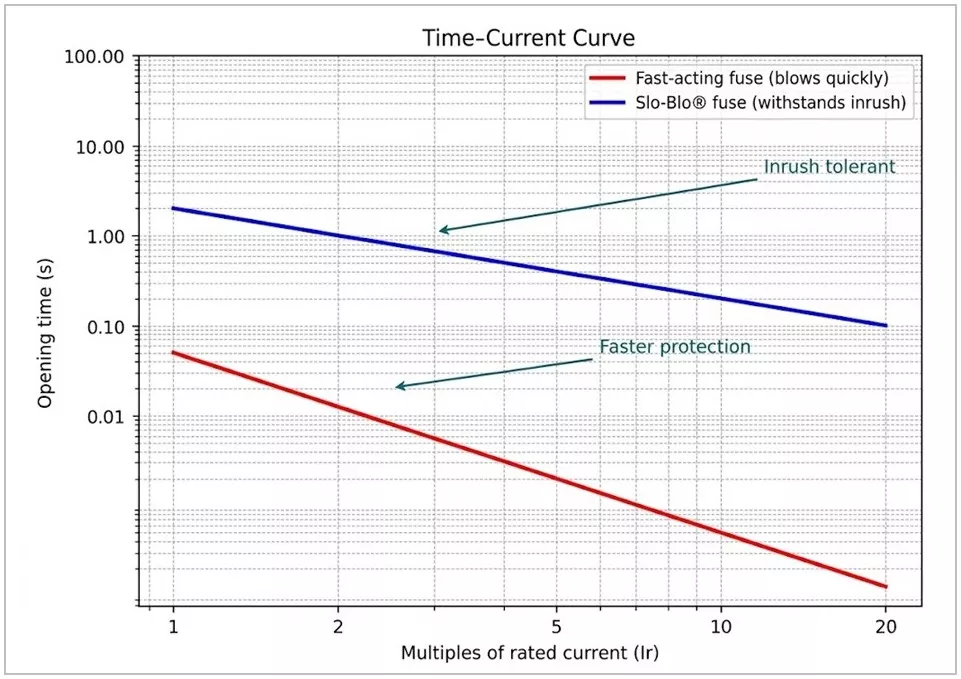
- Fast-blow (F) – reacts instantly, protects sensitive semiconductors
- Slow-blow (T / Slo-Blo®) – tolerates inrush currents from motors/transformers
Typical time–current curve (Slo‑Blo® vs fast acting fuse):
3. Specialty Fuses
| Types | Image | Description |
|---|---|---|
High-voltage Fuses Overcurrent Protection, One-shot | 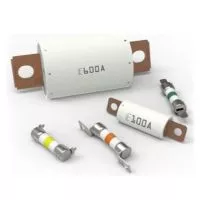 | Used for industrial, EV, medical, power conversion. |
Thermal Fuses (TCO) Overtemperature Protection, One-shot
| 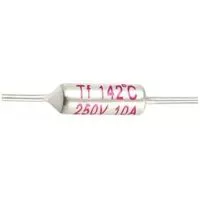 | Open on excess temperature (motors, transformers). |
Resettable Polyfuses (PTC) Overcurrent Protection, Resettable
| 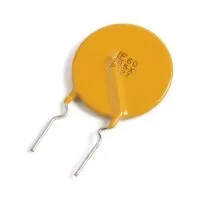 | Portable devices, USB, battery packs. |
| Special Fuse- Shunt (measure current) | 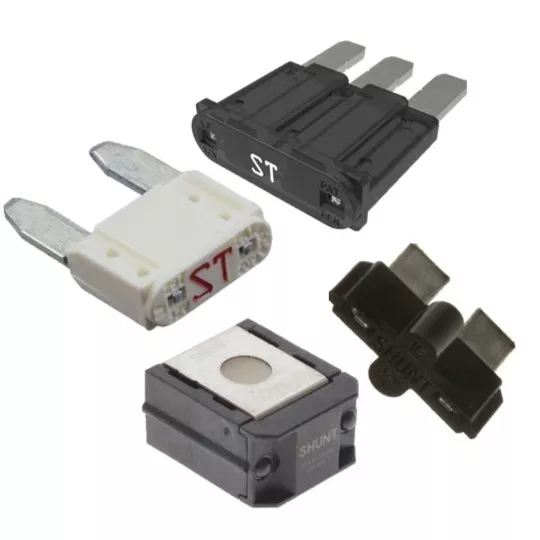 | Tracks the current flow. Just a precise resistor. It never actually blows.
|
4. Based on Reset Capability
| Types | Image | Description |
|---|---|---|
| One-time use Fuses | 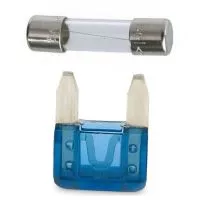 | Must be replaced once blown. |
| Resettable Fuses | 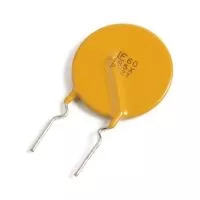 | Self-reset after fault clears. |
Key specifications
- Rated current (Ir): Maximum continuous current at 25 °C without opening.
- Rated voltage (Vr): Maximum system voltage at which the fuse can safely interrupt a fault.
- Breaking/interrupting capacity (Iᵦ): The maximum fault current that a fuse can safely interrupt at its rated voltage.
- Time–current characteristic: “How fast it blows” at multiples of Ir (Fast vs Slo‑Blo®/Time‑Lag).
- I²t (melting let‑through energy): I²t is the fuse’s “energy rating”- it tells how much fault current (amperes squared × time) the fuse can safely handle before it blows. Higher I²t means the fuse can withstand larger short bursts of current without opening; lower I²t means faster, more sensitive protection.
- Resistance / voltage drop / power dissipation: The fuse itself has some resistance, so when current flows, it causes a small voltage drop and heat loss. It is important to check in low-voltage circuits where even a small drop can affect performance.
- Temperature derating: Fuse opens sooner at high ambient; use manufacturer’s derating curves.
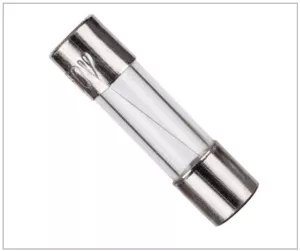
Example Littelfuse 217 Series Glass Cartridge Fuse Specifications:
| Type | Description |
|---|---|
| Fuse Type | Cartridge, Glass |
| Current Rating | 0.5A (500mA) |
| Voltage Rating | 250VAC |
| Breaking/interrupting capacity (Iᵦ) | 35A |
| Response Time | Fast Blow |
| Operating Temperature | -55°C to 125°C |
| Melting I²t | 0.215 |
| Size | 5mm × 20mm |
| Manufacturer | Littelfuse |
| RoHS3 | Yes |
Example Fuse Time-Current Characteristic (TCC) Curve:

How to select a fuse (field‑proven workflow)
Step 1 — Define the job
- Nominal load current (I_load, RMS/avg) and ambient temp range.
- Supply voltage (AC/DC) and fault current available (source + path).
- Expected inrush/starting profile (motors, caps, heaters).
- Safety/agency needs (UL/IEC/automotive ISO).
Step 2 — Pick the construction
- Mains / high interrupt: Ceramic time‑lag.
- General low‑energy: Glass or SMD thin‑film.
- Automotive harness: Blade (ATOF/MINI/MICRO2), MEGA for battery.
- Resettable needs: PTC 1812L (ports) or MHP (battery).
Step 3 — Size the current rating
- Start at 1.25× to 1.5× I_load (at 25 °C).
- Check temperature derating curve → reduce Ir if needed (hot environments).
Step 4 — Pass the inrush
- Use the time–current curve: ensure the fuse does not open at the inrush multiple for the duration. E.g., Inductive loads like Motors, solenoid valve (Select Slo‑Blo® for transformer/motor/capacitor inrush.)
Step 5 — Fault safety check
- Ensure Vr ≥ system voltage and Iᵦ ≥ available fault current (especially on AC mains → prefer ceramic high‑Iᵦ series like 215/514).
Step 6 — Verify I²t
- Compare fuse I²t (melting) with inrush pulse I²t (or downstream semiconductor limits). Favor a lower I²t if you must protect devices with a tight SOA.
Step 7 — Package & logistics
- PCB space (SMD vs THT), serviceability (cartridge in holder), cost, and availability.
Worked examples
Example A — 85–265 VAC 60 W SMPS
- AC mains, high surge + inrush → ceramic time‑lag
- Pick 5×20 mm 215 for input; NTC + MOV in front; check interrupt rating and surge withstand.
Example B — Automotive battery feed (100 A)
- Under‑hood battery distribution → MEGA® 32 V 100 A bolt‑down; confirm 2 kA interrupt @32 V and ambient derating.
Common mistakes & field failures (and how to avoid)
- Choosing Vr too low → arc doesn’t extinguish on DC → fire risk. (Always check Vr.)
- Glass fuse where interrupt rating is insufficient→ use ceramic (215/514) on high‑energy mains.
- Ignoring ambient temp → nuisance blows in summer (use derating).
- Not accounting for inrush → fast‑acting fuse nuisance trips on power‑up (use Slo‑Blo® like 315/218/468).
- Using PTC where one‑time protection is required by safety→ select the proper cartridge fuse.
Mounting/torque errors on bolt‑down fuses → localized heating; follow torque specs (MEGA).
Quick selection tables (by situation)
| Situation | Image | Recommended type |
|---|---|---|
AC Mains Adapter (25–200 W) | 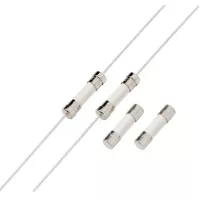 | Littelfuse 5mm x 20mm Ceramic Cartridge |
Automotive Harness Branch (Secondary Circuits) |  | ATOF / MINI / MICRO2 Blade Fuses |
Battery or Alternator Feed (Primary Power) | 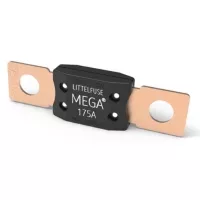 | MEGA Series Boltdown Fuse |
Concept understood? Let's apply and learn for real