
14. RC Delay Capacitor Selection
1. Component Purpose & Calculation
When the board powers ON, the controller should not start immediately — it needs a short reset delay (~5 ms) to let the power supply stabilize. This is done with a simple RC timing circuit.
RC Time Constant Calculation:
τ = R × C = 100kΩ × 10nF = 1 ms
Total delay ≈ 5τ = 5 × 1 ms = 5 ms
For a timing circuit, the capacitor’s value must stay accurate and stable across temperature. This is why a C0G/NP0 dielectric is required — it has near-zero capacitance change with temperature, unlike X7R which can drift ±15% over its temperature range.
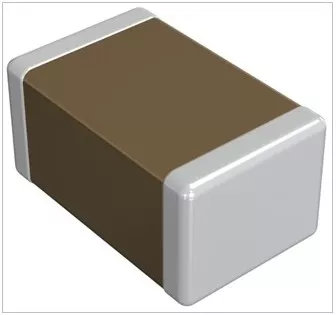
Required: 10nF · ±5% · C0G/NP0 · ≥25V · 0603 · SMD · −55°C to +125°C · RoHS
2. How to Find It on DigiKey
Go to DigiKey.com → Capacitors → Ceramic Capacitors
Apply these filters:
- Capacitance → 10000pF (10nF)
- Voltage Rated → 25V or higher
- Temperature Coefficient → C0G, NP0
- Tolerance → ±5% or tighter
- Package / Case → 0603 (1608 Metric)
- Part Status → Active
Tip: On DigiKey, C0G and NP0 are the same dielectric — just different naming conventions. Both will appear under the C0G/NP0 filter option.
3. Key Specifications & What They Mean
| Specification | Required | Why |
|---|---|---|
| Capacitance | 10nF | Sets the RC delay to 5 ms with 100kΩ. |
| Tolerance | ±5% | Tight tolerance keeps timing accurate. |
| Dielectric | C0G/NP0 | Near-zero drift; essential for timing circuits. |
| Voltage Rating | ≥25V | Safe margin for low-voltage timing circuits. |
| Package | 0603 | Standard small SMD package. |
| Temp Range | −55°C to +125°C | Standard ceramic capacitor range. |
| RoHS | Yes | Compliance required. |
Tip: Never use X7R or Y5V for timing circuits. X7R can drift ±15% with temperature, and Y5V can lose up to 80% capacitance — both would make the delay wildly inaccurate.
4. Selecting a Safe, Production-Ready Part
The filtered list will show many matching parts. Before you pick one, check: Is it Active? Is stock available? Is the manufacturer reputable? Is a datasheet available?
Full checklist: How to Select a Safe, Production-Ready Component — EWskills Guide
5. Filtered DigiKey Link
➡ View Matching Parts — 10nF, 0603, C0G/NP0, ±5%, ≥25V