
15. PPTC Fuse for Speaker Output Protection
Rohit is designing a 12V audio amplifier board that drives a 4Ω speaker at up to 10W.
At full power, the normal speaker current is approximately 1.6A RMS.
To protect the speaker and amplifier from short circuit or sustained overload, he needs a through-hole PTC resettable fuse in series with the speaker output.
The fuse must hold above normal audio current with margin for thermal derating inside the amplifier enclosure, and trip on overload, then reset automatically when the fault is removed.
The company's AVL specifies Littelfuse, so the part must be selected from Littelfuse on DigiKey.
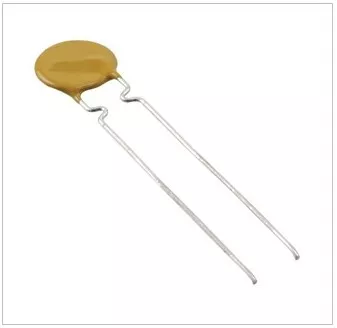
Help him select a suitable PTC resettable fuse from Littelfuse on DigiKey.
Visit DigiKey's Polyfuses category and find a suitable part.
What is a Polyfuse?
A Polyfuse (also called a Resettable Fuse or PPTC device) is a polymeric positive temperature coefficient device used for resettable overcurrent protection.
- At normal current → very low resistance → circuit runs normally.
- At fault current/short → device heats up → resistance increases sharply → limits current flow (like an open fuse).
- When the fault is cleared, and power is removed → it cools and resets, ready for reuse.
Key difference from a normal fuse: A glass fuse must be replaced once blown, while a Polyfuse resets automatically.
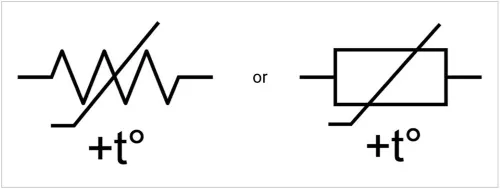
Schematic Symbols of Polyfuse:
Why Polyfuses are Important
- Prevent damage from overcurrent and short circuits.
- Save cost and downtime → no need for manual replacement.
- Provide user-friendly protection in consumer and embedded products.
- Essential for meeting safety and USB/IEC standards in many devices.
Real-world example:
- In a USB port, if a user connects a faulty cable drawing >1 A, the Polyfuse trips → saves the motherboard without blowing permanently.
Practical Use Cases
- USB ports – resettable protection against shorts.
- Battery packs (Li-ion) – protect cells from overcurrent or runaway.
- Consumer devices – toys, cameras, chargers, IoT nodes.
- Telecom & networking – line cards, Ethernet ports.
- Automotive & Industrial – ECUs, infotainment, instrument clusters.
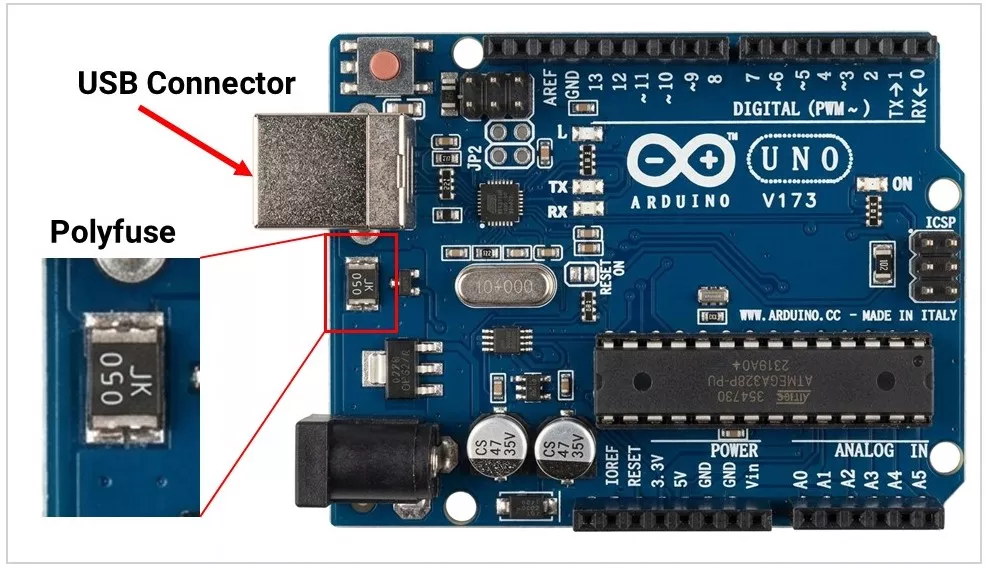
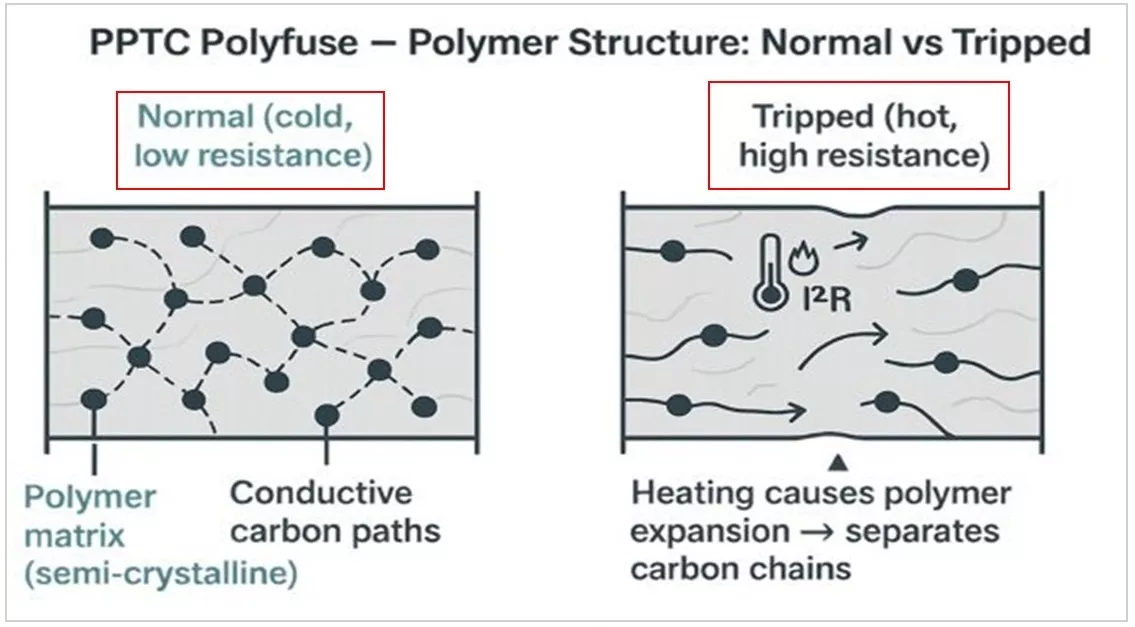
How It Works (Principle)
- Constructed from a polymer matrix with conductive carbon particles.
- Normal condition: Carbon paths conduct → device acts like a low-resistance resistor.
- Overcurrent condition: Current heats polymer → expansion separates carbon particles → resistance rises rapidly (hundreds of ohms) → limits current.
- Cooling/reset: When power is removed and device cools, the carbon paths reconnect → low resistance restored.
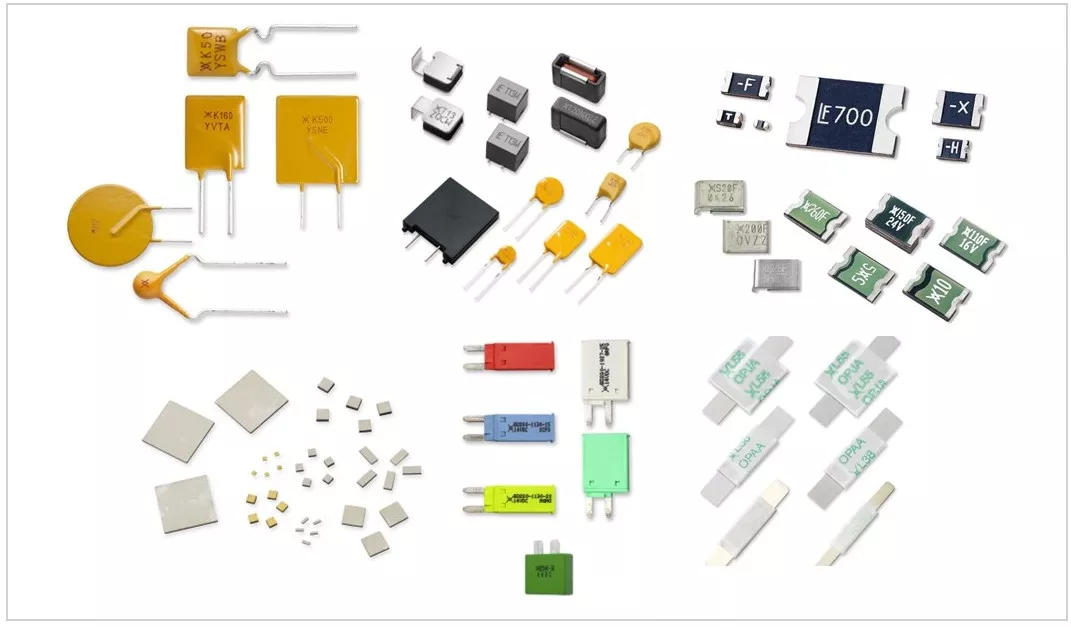
Types of Polyfuses
| Types | Images | Description |
|---|---|---|
| Radial Leaded | 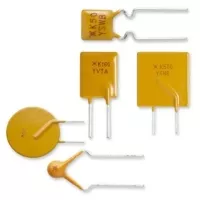 | Through-hole mounting. Used in adapters, chargers, and battery packs. |
| Surface Mount | 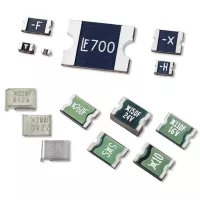 | Compact footprint (SMD package- 1206, 1812, 2920). Used in USB ports, portable electronics, and telecom boards. |
| High-Hold Automotive/Industrial | 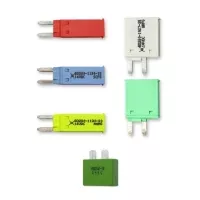 | Designed for higher voltage/current. |
| Battery straps | 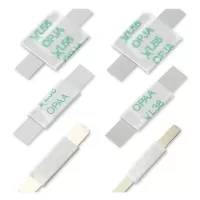 | Welds directly to battery cells. Resets when it cools. Stops battery pack fires. |
Key Specifications (Explained Simply)
- Hold Current (Ihold):
- The maximum continuous current the device can carry without tripping.
- Trip Current (Itrip):
- Current at which the device “trips” into high resistance.
- Time-to-Trip:
- The time it takes to respond once Itrip is reached.
- Can be ms to seconds (not instant like TVS diodes).
- Rated Voltage (Vmax):
- The maximum circuit voltage it can withstand.
- Initial Resistance (Rmin, Rmax):
- Device resistance before tripping.
- Important for low-voltage circuits (USB, battery packs).
- Post-Trip Resistance (R1):
- Resistance after tripping (very high, limits current).
- Power Dissipation (Pd):
- Heat is generated in normal operation.
- Reset Cycles:
- Can reset hundreds–thousands of times, but resistance increases slightly with age.
Example Littelfuse PolySwitch RHEF series Ployfuse Specifications:
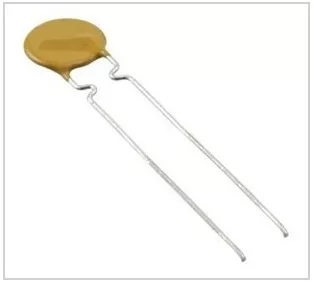
| Type | Description |
|---|---|
| Manufacturer | Littelfuse Inc. |
| Type | Polymeric |
| Voltage - Max | 16V |
| Current - Hold (Ih) (Max) | 2 A |
| Current - Trip (It) | 3.8 A |
| Current - Max | 100 A |
| Time to Trip | 4.3 s |
| Resistance - Initial (Ri) (Min) | 45 mΩ |
| Resistance - Post Trip (R1) (Max) | 110 mΩ |
| Operating Temperature | -40°C ~ 125°C |
| Mounting Type | Through Hole |
| Package / Case | Radial, Disc |
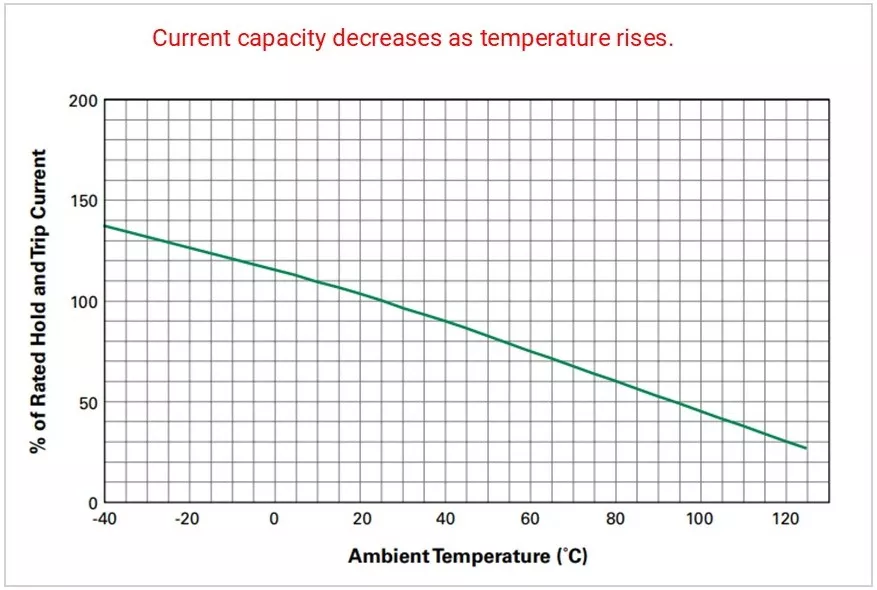
Example Polyfuse Temperature Rerating Curve:
How to select PPTC
- Define normal operating current (Ihold): Choose a PPTC with hold current higher than your circuit’s maximum steady current so it doesn’t trip during normal operation.
- Check trip current (Itrip): Ensure the trip current is below the fault current level, so the fuse reliably activates during overload or short-circuit conditions.
- Match voltage rating: Select a device with a maximum voltage rating equal to or higher than your circuit voltage.
- Consider ambient temperature: PPTC performance changes with temperature, so apply derating if the device operates in high-temperature environments.
- Evaluate resistance (Rinitial): Lower resistance reduces voltage drop and power loss during normal operation.
- Verify response time and reset behavior: Ensure the trip time suits your protection needs and that the reset characteristics match how quickly the circuit should recover.
Advantages & Limitations
Advantages:
- Resettable → no replacement
- Low cost, small size
- Perfect for user-accessible ports (USB, chargers).
Limitations:
- Slower response (ms) → cannot catch fast spikes (use TVS diodes instead).
- Resistance increases after every trip (aging).
- Degradation Over Cycles: PPTCs have a limited "trip cycle" life. Repeated tripping causes thermal stress on the polymer matrix, which can lead to permanent changes in trip characteristics or eventual failure.
Key Takeaways for Engineers
- Polyfuses protect against overcurrent — not voltage surges.
- Always combine with TVS diodes or MOVs for complete protection.
- Perfect for resettable user-accessible protection (USB ports, batteries).
- Always check Ihold vs system current and Itrip vs fault current